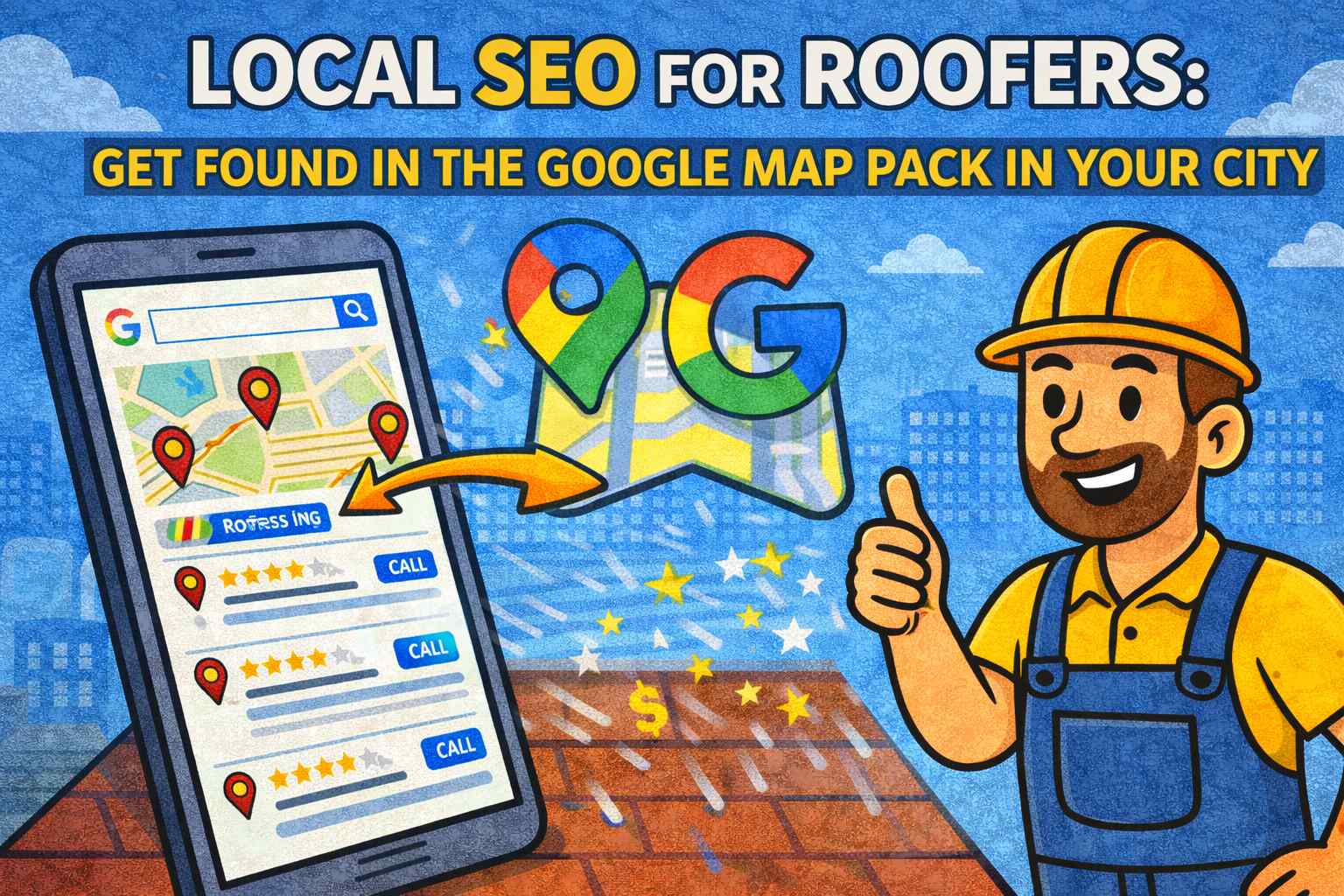
When a homeowner types “roof repair near me” or “roofer in [your city],” Google usually shows a small map with three local roofing companies at the top. That “3-pack” is the Google Map Pack—and if you’re not in it, you’re invisible for a huge chunk of high-intent searches.
Local SEO is how you show up there consistently.
In this guide, we’ll walk through how roofing companies can use local SEO to rank in the Map Pack, get more local calls, and turn searchers into booked jobs. If you’d rather have a done-for-you system, you can see how we help contractors with that here:
https://roofingleads.help/services/
Why the Google Map Pack Matters So Much for Roofers
The Map Pack is prime real estate for roofers because:
- People searching are usually ready to hire, not just researching
- It shows local results, matching your service area
- On mobile, the Map Pack often appears above regular organic listings
- It prominently displays your reviews, phone number, and address
Showing up here can mean:
- More emergency leak repair calls
- More quote requests for replacements
- More opportunities for commercial and HOA work in your area
Local SEO is all about sending Google clear, consistent signals: who you are, where you work, and what you’re best at.
Step 1 – Set Up and Optimize Your Google Business Profile
Your Google Business Profile (GBP) is the foundation of local SEO. If this isn’t fully optimized, you’re leaving money on the table.
Claim and verify your listing
If you haven’t already:
- Search your business name in Google
- Claim or create your profile
- Complete the verification (usually a postcard, phone, or email)
Fill out every section properly
Key areas to get right:
- Business name
Use your real business name (avoid keyword stuffing in the name). - Primary category
Use “Roofer” (or the closest match) as your primary category. - Additional categories (if relevant)
Examples: “Roofing contractor,” “Siding contractor,” “Gutter cleaning service.” - Phone number
Use a local number when possible. Make sure it matches your website. - Website URL
Point to a strong page that converts visitors into leads—often your main service page or a city-specific page. - Service areas
Add cities and regions you actually serve. These should line up with how you present your markets on your site, similar to:
https://roofingleads.help/locations/ - Hours
Accurate business hours, including special hours in storm season if applicable.
Add services, description, and photos
- Business description
Explain who you are, what you do, and where you work. Mention your key services (roof repair, replacement, commercial roofing, emergency leaks) and cities. - Services
Add your main roofing services. This supports both search relevance and customer clarity. - Photos & videos
Upload real photos: crews on jobs, finished roofs, equipment, office/yard, trucks with logos, before/after shots.
A fully built-out GBP is one of the fastest ways to improve your chances of showing up in the Map Pack for searches in your service area.
Step 2 – Build Strong Location & Service Area Pages on Your Website
Google doesn’t just rely on your GBP—it checks whether your website backs up the local signals.
Create a clear locations structure
On your site, you should have a structure similar to a Locations hub, like:
https://roofingleads.help/locations/
From that hub, link to individual pages such as:
- “Roofing Contractor in [City]”
- “Roof Repair in [City]”
- “Commercial Roofing in [City]”
Each city or service area page should:
- Clearly mention the city or region in the H1 and throughout the copy
- Talk about the types of roofs and projects common in that area
- Show local photos and testimonials where possible
- Include your phone number and a strong call-to-action form
Keep your NAP consistent
NAP = Name, Address, Phone.
- Make sure your business name, address, and phone number on your website match exactly what’s in your Google Business Profile.
- Use the same formatting everywhere (no random abbreviations or variations).
Consistency is a big trust signal for Google and helps your Map Pack rankings.
Step 3 – Get More (and Better) Reviews in Your City
Reviews are a huge factor in the Map Pack—not just how many, but how consistent and recent they are.
Build a simple review system
After every completed job, especially in key target cities:
- Ask your customer if they’re happy
- If yes, send them a direct review link to your Google profile
- Make it easy: text or email the link while you’re still on site or right after
You can create a short review “script” for your team so they’re not guessing what to say.
Respond to all reviews
- Thank people for positive reviews and mention the city or neighborhood they’re in when appropriate.
- Respond calmly and professionally to negative reviews—don’t argue.
Consistent reviews across your service areas support both rankings and conversion. People choosing between 2–3 roofers in the Map Pack often pick the one with the best and most recent reviews.
Step 4 – On-Page Local SEO Basics for Your Roofing Website
Your site’s content and structure help Google understand where you should rank.
Optimize your core service pages
You should have clear, well-structured pages for your main services, like:
- Roof replacement
- Roof repair
- Storm and hail damage
- Commercial roofing
- Maintenance and inspections
These pages should:
- Use city and region references where appropriate
- Clearly explain your process, timeline, and what makes you different
- Include strong CTAs to call or request a quote
If you want a feel for how to structure service-focused content, check out:
https://roofingleads.help/services/
Use local keywords naturally
On your service and city pages, use phrases like:
- “roof replacement in [City]”
- “emergency roof repair in [City]”
- “commercial flat roofing services in [City/Region]”
Don’t stuff the same phrase over and over. Write like a human first, and make sure the location references feel natural.
Step 5 – Local Citations and Directories (Without Going Overboard)
Local citations are mentions of your business name, address, and phone on other websites (directories, local business listings, etc.).
Focus on the important ones first
Start with:
- Google Business Profile
- Bing Places
- Apple Maps
- Yelp
- Facebook business page
- Local chamber of commerce or business associations
- Major industry/home services sites in your country
Make sure your NAP is identical to what’s on your website and GBP.
You don’t need thousands of random low-quality directory listings. A strong, consistent base of key citations is enough to support your Map Pack rankings.
Step 6 – Use Content to Target Local Searches
Your blog and educational content can support local SEO and Map Pack performance.
Create local-focused content
Examples:
- “Roof Replacement Costs in [City]: What Homeowners Should Expect”
- “Hail Damage Roof Checklist for Homeowners in [Region]”
- “Flat Roof Maintenance Tips for Commercial Buildings in [City]”
- “Winter Roof Maintenance Guide for [City/Region] Homeowners”
Each article can:
- Mention your service areas
- Link back to your city/service pages
- Answer the questions your customers actually ask
You can build this content out systematically, similar to how we publish roofing lead generation articles and marketing guides on:
https://roofingleads.help/blog/
Over time, this builds authority and supports your local rankings.
Step 7 – Use GBP Posts and Photos to Stay Active
Google pays attention to how active and complete your profile is.
Regularly post updates
Use Google Business Profile posts for:
- Storm alerts and inspection offers
- Seasonal maintenance reminders
- Recent project highlights
- Special promotions or financing options
These posts don’t need to be long, but they should be relevant and local. Think “mini-ads” that help both your visibility and your conversions.
Add new photos regularly
- Upload in-progress and completed job photos
- Show crews working safely and professionally
- Highlight different neighborhoods and cities you serve
Fresh visuals send good signals to both Google and potential customers.
Step 8 – Track Your Local SEO and Map Pack Results
You can’t improve what you don’t track.
Watch your key metrics
Use a mix of:
- Google Business Profile Insights (views, calls, direction requests, website clicks)
- Call tracking numbers for local campaigns
- Website analytics showing traffic from local queries and city pages
Watch trends over time:
- Are views from your target cities going up?
- Are you getting more calls directly from your profile?
- Which location pages are driving the most leads?
The goal is not just ranking—it’s leads and jobs in the right areas.
When to Get Help With Local SEO for Your Roofing Company
Local SEO takes time and consistency. It might be time to bring in help if:
- You’ve set up your Google Business Profile but are still buried in search results
- You don’t have clear, consistent city/service pages on your website
- You’re not getting many calls from organic or Map Pack results
- You want to expand into new cities or commercial work and need a localized strategy
A good roofing-focused partner will:
- Clean up and optimize your GBP
- Build or refine your location and service pages
- Put a review system in place
- Help you integrate local SEO with your other lead sources like Google Ads and Facebook Ads
If you’d like a local SEO and roofing leads plan built specifically for your markets, you can request a strategy call here:
https://roofingleads.help/contact-2/
Next Steps: Simple Local SEO Checklist for Roofers
Here’s a quick checklist you can start on this week:
- Claim and fully optimize your Google Business Profile
- Make sure your name, address, and phone are consistent everywhere
- Build or improve your city/service area pages (structured like a Locations hub):
https://roofingleads.help/locations/ - Create or update your core roofing service pages, similar in depth to:
https://roofingleads.help/services/ - Start a simple review request process for every completed job
- Add local-focused content to your blog over time:
https://roofingleads.help/blog/ - Track calls, form fills, and jobs coming from local search and Map Pack
Do a little bit of this every week and you’ll gradually move up in the Map Pack—and more importantly, your phone will start ringing with high-intent, local roofing leads.
When you’re ready to accelerate that process and plug into a complete roofing lead system, book a call here and we’ll map it out with you:
https://roofingleads.help/contact-2/
Leave a Reply