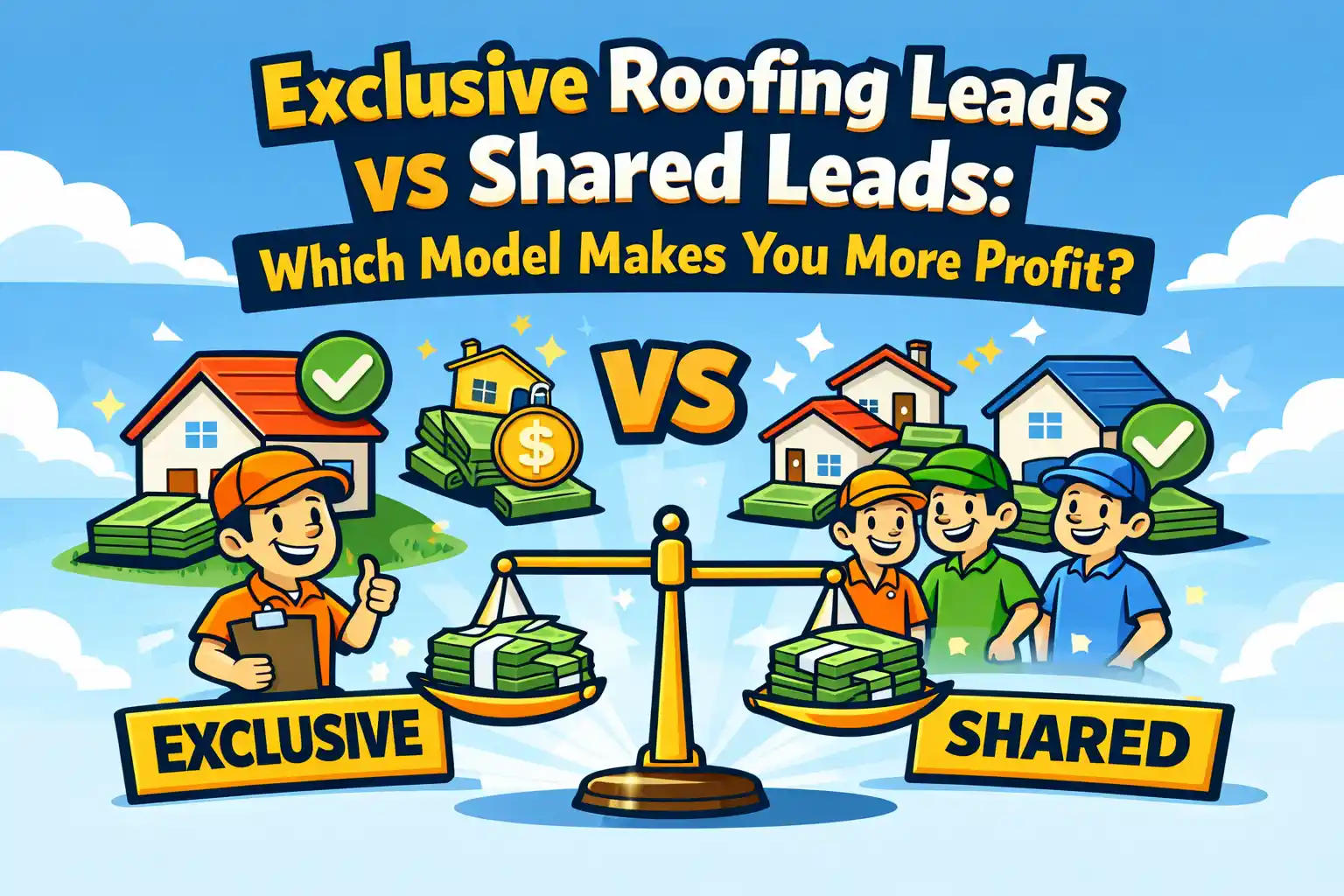
If you’re paying for roofing leads and wondering why your close rate is inconsistent, the problem may not be your sales team — it may be the lead model itself. One of the biggest decisions roofing companies face is choosing between exclusive roofing leads and shared leads. Each model works very differently, and the wrong choice can quietly drain your profit.
This guide breaks down how each lead type actually performs in real roofing businesses and which model tends to produce higher margins over time.
What Are Exclusive Roofing Leads?
Exclusive roofing leads are sold to one contractor only. When a homeowner or property manager submits their information, you’re the only roofing company that receives it.
Common traits of exclusive leads:
- No competition calling the same prospect
- Higher contact and appointment rates
- More control over pricing and sales process
- Typically higher cost per lead
Exclusive leads are often tied to SEO-driven traffic, dedicated landing pages, or owned advertising funnels — not mass marketplaces.
What Are Shared Roofing Leads?
Shared leads are sold to multiple roofing contractors at the same time. The same homeowner inquiry may go to three, five, or even more companies.
Common traits of shared leads:
- Lower upfront cost per lead
- Immediate price competition
- Lower contact and close rates
- Heavy reliance on speed-to-call and discounting
Many roofing companies start here because shared leads feel cheaper — but cost per lead doesn’t equal cost per sale.
The Real Profit Difference: Cost Per Contract
To decide which model is more profitable, you have to look past lead price and focus on cost per closed job.
Shared Lead Economics
Shared leads often look like this:
- Lower lead cost
- Lower contact rate
- Lower close rate
- Higher time spent chasing leads
- Pressure to undercut competitors
In practice, many shared-lead buyers end up paying more per signed contract once wasted time and missed opportunities are factored in.
Exclusive Lead Economics
Exclusive leads typically deliver:
- Higher contact rates
- Higher appointment set rates
- Stronger trust from the start
- Less price shopping
- Higher average job value
This is why many established roofing companies shift away from shared models as they grow. Done-for-you systems like those offered through https://roofingleads.help/services/ are built specifically around exclusive lead ownership.
How Lead Type Impacts Your Sales Funnel
Lead model directly affects how your sales funnel performs.
With shared leads:
- Follow-up must be immediate and aggressive
- Sales scripts are reactive
- Objections are mostly price-based
- Many leads go cold quickly
With exclusive leads:
- Follow-up can be structured and consultative
- Funnel steps are predictable
- Trust is easier to establish
- Long-term nurture becomes viable
If you’ve built a proper roofing sales funnel, exclusive leads usually compound in value instead of burning out.
Residential vs Commercial Roofing: Lead Model Differences
The right model also depends on the type of roofing work you do.
Residential roofing:
- Shared leads can work for high-volume, fast-moving teams
- Exclusive leads work better for premium, insurance, or retail jobs
Commercial roofing:
- Shared leads are rarely effective
- Exclusive leads are almost always required
- Decision cycles are longer and competition is relationship-based
If you serve multiple markets or regions, lead ownership becomes even more important. You can see how location-specific strategies differ at https://roofingleads.help/locations/.
Hidden Costs Most Roofers Miss
Many contractors only track lead price, not:
- Missed calls
- Unreturned voicemails
- Sales rep time
- Opportunity cost of bad leads
- Brand damage from rushed calls
Shared leads amplify these hidden costs. Exclusive leads reduce them by design.
This is a major reason many roofing companies eventually abandon lead marketplaces in favor of owned funnels.
Which Roofing Lead Model Is Right for You?
Shared leads may make sense if:
- You’re just starting out
- You need immediate volume
- You have strong call coverage
- You’re competing primarily on price
Exclusive leads are usually better if:
- You want predictable revenue
- You care about profit per job
- You want to build long-term brand equity
- You plan to scale beyond one market
If you’re unsure, reviewing your funnel metrics can make the decision obvious.
How to Transition from Shared to Exclusive Roofing Leads
Moving away from shared leads doesn’t require flipping a switch overnight.
Common transition steps:
- Keep shared leads short-term while building owned traffic
- Invest in SEO and branded search
- Build dedicated landing pages and tracking
- Shift sales scripts from price-first to value-first
Many contractors start this process by learning more through guides at https://roofingleads.help/blog/.
Final Verdict: Profit Favors Ownership
Shared leads can create short-term wins, but exclusive leads usually produce higher profit, better close rates, and more control as your roofing business matures.
If you want to see what exclusive roofing leads look like in practice — or want help replacing shared leads with a system you actually own — book a strategy call here:
https://roofingleads.help/contact-2/
The most profitable roofing companies don’t just buy leads. They build lead systems they control.
Leave a Reply