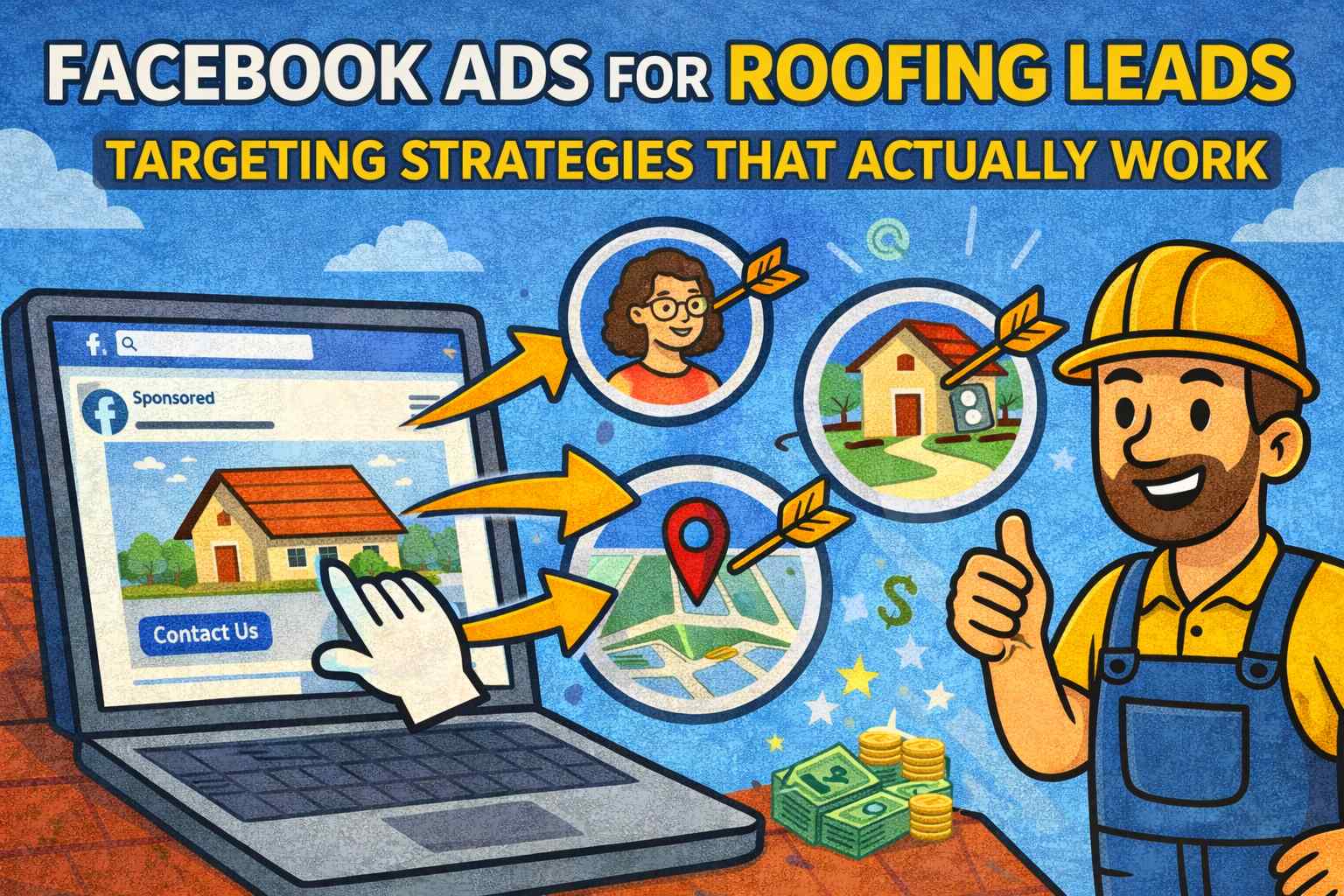
If you’ve ever boosted a Facebook post, burned a few hundred dollars, and ended up with nothing but likes from people who don’t even own a house… you’re not alone.
Facebook and Instagram can be incredible roofing lead sources—but only if you target the right people, with the right offer, in the right locations. In this guide, we’ll walk through practical targeting strategies roofers can use to turn social traffic into real roofing leads.
If you want help turning these strategies into a full lead system, you can see how we work with contractors at:
https://roofingleads.help/services/
Why Facebook Ads Work for Roofing (When Done Properly)
Google Ads catches people actively searching “roof repair near me.” Facebook is different. Most people are scrolling, not hunting for a roofer.
So why use Facebook at all?
- You can put offers in front of homeowners before they start Googling
- You can stay visible during storm season and renewal cycles
- You can retarget people who visited your site or clicked your Google Ads
- You can fill pipeline with inspection requests, maintenance programs, and quotes
Think of Facebook ads as a demand generator and follow-up amplifier, not a replacement for Google or your website. It works best as part of an overall lead engine like the ones we talk about across the guides on:
https://roofingleads.help/blog/
Step 1 – Start With a Clear Offer (Not Just “Free Estimates”)
Targeting is pointless if your offer is boring.
Strong roofing offers for Facebook:
- Free storm damage inspection after hail or wind in a specific area
- Limited-time “roof tune-up” or maintenance package
- Second-opinion review on an insurance scope
- Seasonal checkup (pre-winter, post-winter, pre-rainy season)
- Commercial roof assessment for building owners and property managers
Your targeting will change depending on whether you’re focused on residential, commercial, or a specific region that lines up with where you actually work. (If you cover multiple cities or regions, make sure your campaigns match how your markets are laid out in your Locations section:
https://roofingleads.help/locations/)
Step 2 – Dial In Your Geo-Targeting
Location is the first filter that matters for roofing leads.
Use tight geographic zones
Instead of targeting an entire state or province, focus on:
- Cities and towns where you already do profitable work
- Neighborhoods with the right age/price of homes
- Areas that just got hit by a storm (for storm campaigns)
On Facebook, that usually means:
- “People living in this location” (not just recently in the area)
- Radius targeting around specific zip codes or city centers
- Separate campaigns for different cities or regions if they perform differently
You can later mirror these areas with content and landing pages on your site, organized under:
https://roofingleads.help/locations/
Step 3 – Target Likely Homeowners (Not Just Anyone in the Area)
You don’t want to pay for clicks from renters who can’t make roofing decisions.
While Facebook has reduced some of its detailed targeting for housing-related ads, you can still:
- Focus on age ranges more likely to own homes (for many markets, 28–65+)
- Use income or “household income” segments where available and compliant
- Layer on interests that lean toward homeowners, like home improvement and DIY
For commercial roofing, shift your targeting toward:
- Job titles like “property manager”, “facility manager”, “building owner”
- Interests around commercial real estate and property management
- Lookalike audiences based on your current commercial clients (more on this below)
The goal is to get as close as possible to decision-makers—residential or commercial—within the rules of the platform.
Step 4 – Build Smart Custom and Lookalike Audiences
This is where Facebook gets powerful for roofing companies that already have some traffic and jobs under their belt.
Custom audiences you should be using
- Website visitors
People who visited your site in the last 30–180 days (especially your service and estimate pages). - Lead form submitters
People who filled out a Facebook lead form but didn’t become customers. - Customer lists
Upload a list of past customers (emails/phone numbers) to stay in front of them for referrals, maintenance, and upgrades.
These custom audiences can be retargeted directly or used to create lookalikes.
Lookalike audiences based on your best customers
Create lookalike audiences from:
- Your best past customers (high-ticket jobs, low headaches)
- People who filled out your quote or inspection forms
- Visitors to key pages like “Roof Replacement” or “Commercial Roofing”
Facebook will find people who “look like” those audiences in your target areas. This is often more effective than guessing interests from scratch.
If you’re driving traffic back to landing pages and service pages built similarly to what we outline on:
https://roofingleads.help/services/
these lookalikes can become a reliable stream of high-intent prospects.
Step 5 – Use Retargeting to Capture “Almost Leads”
Most people don’t become a lead the first time they see you. That’s where retargeting comes in.
Who to retarget
- People who visited your website but didn’t request an estimate
- People who watched a large portion of your video ads
- People who opened but didn’t submit Facebook lead forms
What to show them
- Stronger offers (“Storm damage in your area? Get a free inspection.”)
- Social proof (reviews, testimonials, project photos)
- “Before and after” transformations
- Urgency reminders (limited-time promo, season ending, insurance deadlines)
Retargeting is cheaper than cold prospecting and hits people who already showed some interest. When paired with educational content and consistent branding, it supports everything else in your roofing lead generation funnel (SEO, Google Ads, referrals, etc.).
Step 6 – Match Your Creative to Your Targeting
Even the best targeting fails if your ads look like wallpaper.
For residential roofing campaigns
Use visuals and messaging that speak directly to homeowners:
- Before/after roof photos
- Close-ups of hail damage, missing shingles, or leaks (without being gruesome)
- Families, curb appeal, and peace-of-mind angles
Copy angles that work:
- “Recent hail in [City]? Get your roof inspected before your insurance deadline.”
- “Roof older than 15 years? Find out if a replacement makes more sense than another repair.”
- “Small leak now can become a big problem later—book your inspection today.”
For commercial roofing campaigns
Shift the focus to:
- Flat roofs, big buildings, and mechanical units
- Protection of equipment and interior assets
- Lifecycle cost, maintenance plans, and tenant comfort
Copy angles:
- “Flat roof leaking? Protect your tenants and equipment with a free commercial roof assessment.”
- “Stop emergency repairs. Start a proactive roof maintenance plan for your building.”
Use case studies and photos that tie into real jobs and locations you serve. As you build these assets, turn them into content on your site and repurpose them as blogs or case studies, which you can later showcase under:
https://roofingleads.help/blog/
Step 7 – Connect Facebook Ads to a Proper Funnel
Clicks don’t pay the bills. Booked inspections and signed contracts do.
Where you send traffic matters
For most roofing campaigns, traffic should go to:
- A specific landing page for the offer
- A service page tailored to the problem (leaks, replacement, storm, commercial)
- A short, mobile-friendly form plus click-to-call options
Avoid sending ad traffic to a generic homepage that doesn’t match the ad message. Each major Facebook campaign (storm, maintenance, commercial, replacement) should connect to its own page—similar in structure to how your core services are laid out at:
https://roofingleads.help/services/
Have follow-up ready before you launch
Your office or sales team should be ready to:
- Call new leads quickly (within minutes, when possible)
- Text/email people who don’t answer
- Track leads and statuses in a CRM or simple pipeline
- Mark which leads came from Facebook, Google, referrals, etc.
A solid follow-up process can double the number of jobs you close from the same ad spend.
Step 8 – Watch the Right Numbers (Not Just Likes)
To know if your Facebook ads are working, focus on:
- Cost per lead (form fill or qualified call)
- Cost per booked appointment
- Cost per signed job
- Revenue and profit from Facebook-sourced customers
If you’re running Google Ads and SEO alongside Facebook, compare performance across channels. Sometimes Facebook shines for storm damage and maintenance offers, while Google dominates for emergency leak calls and core replacements.
You can build reports that line up with your service locations and offerings—similar to how your markets are broken out at:
https://roofingleads.help/locations/
When to Get Help With Facebook Ads for Roofing Leads
You can absolutely test and refine Facebook campaigns yourself. But it might be time to bring in roofing-specific help when:
- You’ve tried boosting posts and DIY campaigns with mixed results
- You don’t have time to manage targeting, creative, and optimization every week
- You want Facebook to plug into a bigger lead engine (SEO, Google Ads, email follow-up, etc.)
- You’re expanding into new cities or commercial work and need predictable pipelines
A good partner will:
- Understand roofing buyers and seasonality
- Build offers, landing pages, and follow-up processes that match your services
- Integrate Facebook traffic with Google Ads, Local SEO, and your website
- Report on leads, appointments, and jobs—not just impressions and clicks
If you want a strategy that ties Facebook ads into your overall roofing lead generation system, you can request a strategy call here:
https://roofingleads.help/contact-2/
On that call, we’ll look at your markets, services, and current lead sources, then outline how Facebook ads, Google, and your website can work together to bring you more consistent, high-quality roofing leads.
Next Steps: Turn Facebook Into a Real Roofing Lead Source
To recap, making Facebook ads work for roofing looks like this:
- Start with a strong, specific offer
- Target tight geographic areas that match where you actually work
- Focus on likely homeowners or commercial decision-makers
- Use custom and lookalike audiences, not just broad interests
- Retarget visitors, video viewers, and form-openers who didn’t convert
- Match your creative to your audience and service type
- Send traffic to dedicated landing pages with clear CTAs
- Track leads, appointments, and jobs—not just clicks and likes
For deeper guides on roofing lead generation systems, Google Ads, SEO, and more, check out:
https://roofingleads.help/blog/
And if you’d rather plug into a proven roofing lead system instead of guessing on targeting and creatives, book a call here and we’ll map it out with you:
https://roofingleads.help/contact-2/