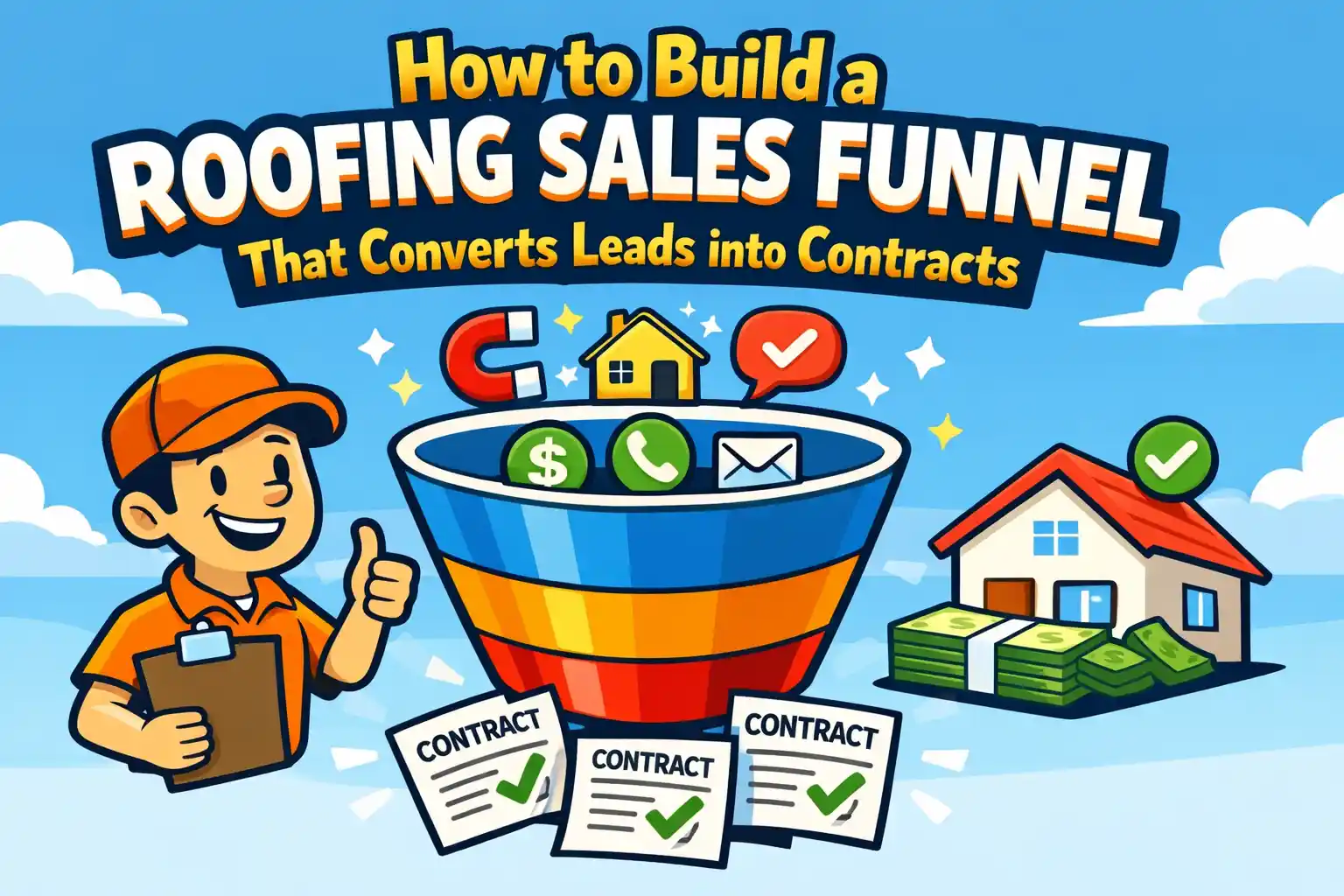
If you’re generating roofing leads but struggling to turn them into signed contracts, the problem usually isn’t lead volume — it’s your sales funnel. Many roofing companies rely on disconnected tactics: ads without follow-up, calls without tracking, and estimates without a clear close process. A high-converting roofing sales funnel fixes this by guiding every lead from first click to signed agreement with intention and structure.
Below is a practical, roofing-specific breakdown of how to build a sales funnel that actually converts leads into revenue.
What a Roofing Sales Funnel Really Is (And What It Isn’t)
A roofing sales funnel is not just ads → phone call → estimate. It’s a system that:
- Captures demand from homeowners or property managers
- Qualifies leads before wasting sales time
- Creates trust before the inspection
- Follows up until a decision is made
- Tracks every step so nothing slips through the cracks
If your funnel relies entirely on reps “just calling back fast,” it’s fragile and inconsistent.
Step 1: Attract the Right Roofing Leads at the Top of the Funnel
The funnel starts long before a phone rings.
High-quality roofing funnels usually combine:
- SEO pages targeting buyer-intent keywords (e.g. roof replacement, roof repair, commercial roofing)
- Paid traffic like Google Ads or Local Services Ads
- Location-specific pages for each market you serve
The key is intent. Traffic should come from people actively looking for roofing services — not general home improvement browsers.
This is where done-for-you systems from https://roofingleads.help/services/ are designed to help, especially if you want leads that are already primed to buy.
Step 2: Capture Leads with Clear, Focused Entry Points
Once someone lands on your site, your funnel needs to capture them immediately.
High-converting roofing funnels typically use:
- Short quote forms (name, phone, address, roof type)
- Click-to-call buttons for mobile users
- Dedicated landing pages (not your homepage)
Avoid overwhelming visitors. One page, one action. If they want more info later, you can provide it after the lead is captured.
Step 3: Qualify Roofing Leads Before Your Sales Team Engages
Not every lead deserves the same amount of sales effort.
Before a rep spends time driving out or preparing a proposal, your funnel should identify:
- Residential vs commercial
- Insurance vs retail
- Emergency vs non-urgent
- Budget expectations (when possible)
Simple qualification steps reduce wasted appointments and improve close rates. This is where many roofing companies lose money by treating every lead equally.
Step 4: Speed-to-Lead and First Contact Strategy
Speed matters — but structure matters more.
Best-performing roofing funnels:
- Contact new leads within 5 minutes
- Use a consistent call script
- Set expectations for the inspection process
- Confirm appointments via text and email
Leads who don’t answer immediately shouldn’t be dropped. Automated follow-up (texts, emails, voicemails) keeps your company top-of-mind without burning sales time.
Step 5: The Inspection-to-Estimate Bridge (Where Most Funnels Break)
Most roofing funnels fail between inspection and estimate.
To fix this:
- Send a recap after the inspection (photos, notes, next steps)
- Set a clear timeline for the estimate delivery
- Explain how decisions are made (insurance approval, financing, timelines)
This step builds trust and prevents the “we went with someone else” response.
Step 6: Follow-Up That Actually Closes Roofing Deals
The majority of roofing contracts are not signed on the first estimate.
A converting funnel includes:
- Scheduled follow-ups (24 hours, 3 days, 7 days)
- Objection-handling sequences (price, timing, insurance confusion)
- Clear calls to action in every follow-up
Silence usually means uncertainty — not rejection. Your funnel should address that automatically.
Step 7: Track Funnel Metrics That Matter
If you don’t track your funnel, you can’t improve it.
Key roofing sales funnel metrics:
- Cost per lead
- Contact rate
- Appointment set rate
- Close rate
- Revenue per lead
When these numbers are visible, you can quickly identify whether the issue is traffic, sales, or follow-up. Many roofing companies use insights like these to decide when to scale or optimize with professional help.
Residential vs Commercial Roofing Funnels Aren’t the Same
Residential funnels emphasize:
- Speed
- Trust
- Financing and insurance clarity
Commercial funnels emphasize:
- Longer nurturing
- Multiple decision-makers
- Documentation and professionalism
If you’re serving multiple markets, your funnel should adapt. This is often covered in deeper guides available through https://roofingleads.help/blog/.
When to Build In-House vs Use a Proven Roofing Funnel
Building your own funnel takes time, testing, and technical setup. For many roofing companies, the faster path is plugging into a proven system that already works across markets.
If you want a sales funnel built specifically for roofing — not generic marketing — exploring https://roofingleads.help/services/ can save months of trial and error.
How to Get Started with a Roofing Sales Funnel That Converts
If your leads aren’t turning into contracts, the fix isn’t more leads — it’s a better funnel.
The fastest way to identify gaps in your current process is to step back and map it end-to-end. If you want expert help reviewing or building your roofing sales funnel, book a strategy call here:
https://roofingleads.help/contact-2/
If you operate in multiple cities or plan to expand, you can also see how location-based funnels are structured at:
https://roofingleads.help/locations/
A roofing sales funnel isn’t about pressure or gimmicks. It’s about guiding the right leads, through the right steps, until signing a contract feels like the obvious next move.