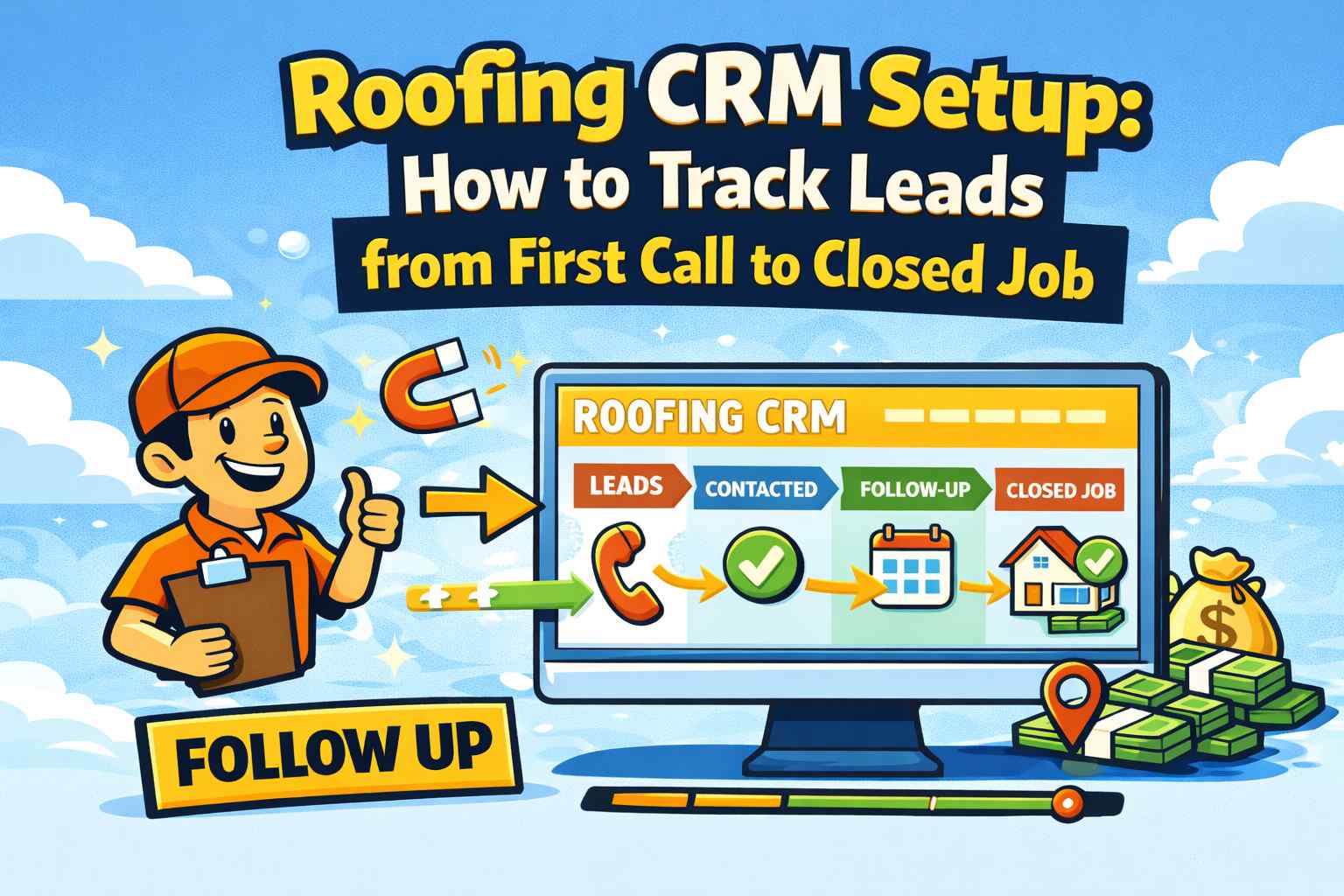
If you don’t know exactly where your roofing leads come from — or what happens to them after the first call — you don’t have a sales system, you have guesswork. A properly set up roofing CRM turns lead chaos into a clear, trackable pipeline from first contact to signed contract.
This guide explains how to set up a roofing CRM that actually supports lead generation, sales follow-up, and revenue tracking.
Why Roofing Companies Need a CRM (Even Small Teams)
Many roofing businesses rely on phones, spreadsheets, and memory. That works until lead volume increases — then deals start slipping through the cracks.
A CRM allows you to:
- Track every lead in one place
- See who contacted the lead and when
- Measure conversion rates at each stage
- Hold sales reps accountable
If you’re investing in leads, tracking is non-negotiable.
Step 1: Define Your Roofing Sales Pipeline Stages
Before setting up software, define your process.
Common roofing CRM stages include:
- New lead
- Contacted
- Inspection scheduled
- Inspection completed
- Estimate sent
- Follow-up
- Closed won / closed lost
Clear stages make reporting meaningful and actionable.
Step 2: Connect All Lead Sources
Your CRM should capture leads from every channel:
- Phone calls
- Website forms
- Paid ads
- SEO pages
- Manual entries
If leads live in multiple inboxes or phones, tracking breaks down. Lead systems like those at https://roofingleads.help/services/ are designed to feed clean data directly into your CRM.
Step 3: Track Calls, Not Just Form Fills
In roofing, calls matter most.
CRM setup should include:
- Call tracking numbers
- Call recordings
- Missed call alerts
- Automatic lead creation from calls
This ensures phone leads don’t disappear — especially during busy days or storms.
Step 4: Assign and Route Leads Automatically
Speed and ownership matter.
Effective CRM setups:
- Assign leads to reps instantly
- Route leads by location or service type
- Notify reps via text or app
Manual assignment creates delays and lost opportunities.
Step 5: Build Follow-Up Workflows Inside the CRM
Your CRM should support follow-up, not replace it.
Best practices include:
- Automated reminders
- Task assignments
- Follow-up sequences
- Status change alerts
This ties directly into strong follow-up systems, which are critical for lead conversion.
Step 6: Track Key Roofing Metrics in Real Time
A roofing CRM is only as useful as the data it shows.
Important metrics include:
- Lead source performance
- Contact rate
- Inspection set rate
- Close rate
- Revenue per lead
When these numbers are visible, decisions become obvious.
Step 7: Use the CRM to Improve Sales Conversations
CRMs aren’t just for managers.
Sales reps benefit from:
- Lead history visibility
- Notes from previous interactions
- Inspection photos and files
- Objection tracking
Better context leads to better conversations.
Step 8: Residential vs Commercial CRM Differences
Residential pipelines move faster.
Commercial pipelines require:
- Longer follow-up timelines
- Multiple contacts per account
- Detailed notes and documents
Your CRM should support both if you serve mixed markets. Educational breakdowns on this are often covered at https://roofingleads.help/blog/.
Step 9: Reporting That Actually Drives Growth
Reports should answer real questions:
- Which lead sources make money?
- Where do deals stall?
- Which reps close best?
- What’s the ROI per channel?
If your CRM can’t answer these, it’s underutilized.
Step 10: Scale CRM Structure Across Locations
Multi-location roofing companies need consistency.
A standardized CRM setup:
- Simplifies training
- Improves reporting accuracy
- Keeps performance comparable
Location-based structures often mirror the setup shown at https://roofingleads.help/locations/.
How CRM Setup Fits Into Your Lead System
A CRM doesn’t create leads — it makes them profitable.
When paired with strong traffic, landing pages, and follow-up systems, it becomes the backbone of predictable growth. This is why CRM integration is a core part of comprehensive lead systems like those at https://roofingleads.help/services/.
How to Set Up a Roofing CRM the Right Way
If your CRM feels messy, incomplete, or ignored, it’s likely not set up around your actual sales process.
If you want help structuring a roofing CRM that tracks leads from first call to closed job — without overcomplicating things — book a strategy call here:
https://roofingleads.help/contact-2/
The roofing companies that scale don’t guess. They track, measure, and improve — deal by deal.