Author: roofingleads

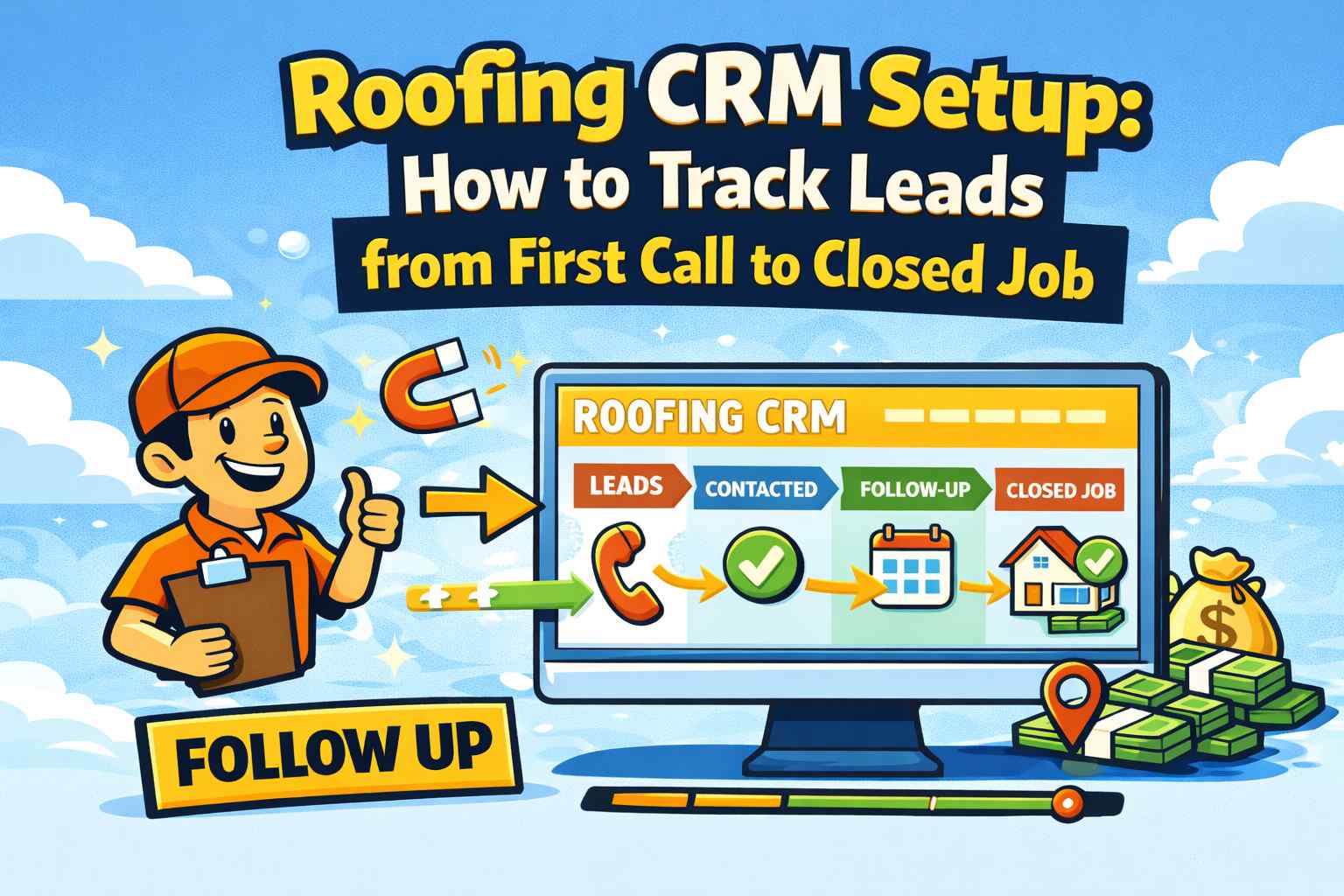
  • Roofing CRM Setup: How to Track Leads from First Call to Closed Job

    Roofing CRM Setup: How to Track Leads from First Call to Closed Job

    If you don’t know exactly where your roofing leads come from — or what happens to them after the first call — you don’t have a sales system, you have guesswork. A properly set up roofing CRM turns lead chaos into a clear, trackable pipeline from first contact to signed contract.

    This guide explains how to set up a roofing CRM that actually supports lead generation, sales follow-up, and revenue tracking.

    Why Roofing Companies Need a CRM (Even Small Teams)

    Many roofing businesses rely on phones, spreadsheets, and memory. That works until lead volume increases — then deals start slipping through the cracks.

    A CRM allows you to:

    • Track every lead in one place
    • See who contacted the lead and when
    • Measure conversion rates at each stage
    • Hold sales reps accountable

    If you’re investing in leads, tracking is non-negotiable.

    Step 1: Define Your Roofing Sales Pipeline Stages

    Before setting up software, define your process.

    Common roofing CRM stages include:

    • New lead
    • Contacted
    • Inspection scheduled
    • Inspection completed
    • Estimate sent
    • Follow-up
    • Closed won / closed lost

    Clear stages make reporting meaningful and actionable.

    Step 2: Connect All Lead Sources

    Your CRM should capture leads from every channel:

    • Phone calls
    • Website forms
    • Paid ads
    • SEO pages
    • Manual entries

    If leads live in multiple inboxes or phones, tracking breaks down. Lead systems like those at https://roofingleads.help/services/ are designed to feed clean data directly into your CRM.

    Step 3: Track Calls, Not Just Form Fills

    In roofing, calls matter most.

    CRM setup should include:

    • Call tracking numbers
    • Call recordings
    • Missed call alerts
    • Automatic lead creation from calls

    This ensures phone leads don’t disappear — especially during busy days or storms.

    Step 4: Assign and Route Leads Automatically

    Speed and ownership matter.

    Effective CRM setups:

    • Assign leads to reps instantly
    • Route leads by location or service type
    • Notify reps via text or app

    Manual assignment creates delays and lost opportunities.

    Step 5: Build Follow-Up Workflows Inside the CRM

    Your CRM should support follow-up, not replace it.

    Best practices include:

    • Automated reminders
    • Task assignments
    • Follow-up sequences
    • Status change alerts

    This ties directly into strong follow-up systems, which are critical for lead conversion.

    Step 6: Track Key Roofing Metrics in Real Time

    A roofing CRM is only as useful as the data it shows.

    Important metrics include:

    • Lead source performance
    • Contact rate
    • Inspection set rate
    • Close rate
    • Revenue per lead

    When these numbers are visible, decisions become obvious.

    Step 7: Use the CRM to Improve Sales Conversations

    CRMs aren’t just for managers.

    Sales reps benefit from:

    • Lead history visibility
    • Notes from previous interactions
    • Inspection photos and files
    • Objection tracking

    Better context leads to better conversations.

    Step 8: Residential vs Commercial CRM Differences

    Residential pipelines move faster.

    Commercial pipelines require:

    • Longer follow-up timelines
    • Multiple contacts per account
    • Detailed notes and documents

    Your CRM should support both if you serve mixed markets. Educational breakdowns on this are often covered at https://roofingleads.help/blog/.

    Step 9: Reporting That Actually Drives Growth

    Reports should answer real questions:

    • Which lead sources make money?
    • Where do deals stall?
    • Which reps close best?
    • What’s the ROI per channel?

    If your CRM can’t answer these, it’s underutilized.

    Step 10: Scale CRM Structure Across Locations

    Multi-location roofing companies need consistency.

    A standardized CRM setup:

    • Simplifies training
    • Improves reporting accuracy
    • Keeps performance comparable

    Location-based structures often mirror the setup shown at https://roofingleads.help/locations/.

    How CRM Setup Fits Into Your Lead System

    A CRM doesn’t create leads — it makes them profitable.

    When paired with strong traffic, landing pages, and follow-up systems, it becomes the backbone of predictable growth. This is why CRM integration is a core part of comprehensive lead systems like those at https://roofingleads.help/services/.

    How to Set Up a Roofing CRM the Right Way

    If your CRM feels messy, incomplete, or ignored, it’s likely not set up around your actual sales process.

    If you want help structuring a roofing CRM that tracks leads from first call to closed job — without overcomplicating things — book a strategy call here:
    https://roofingleads.help/contact-2/

    The roofing companies that scale don’t guess. They track, measure, and improve — deal by deal.

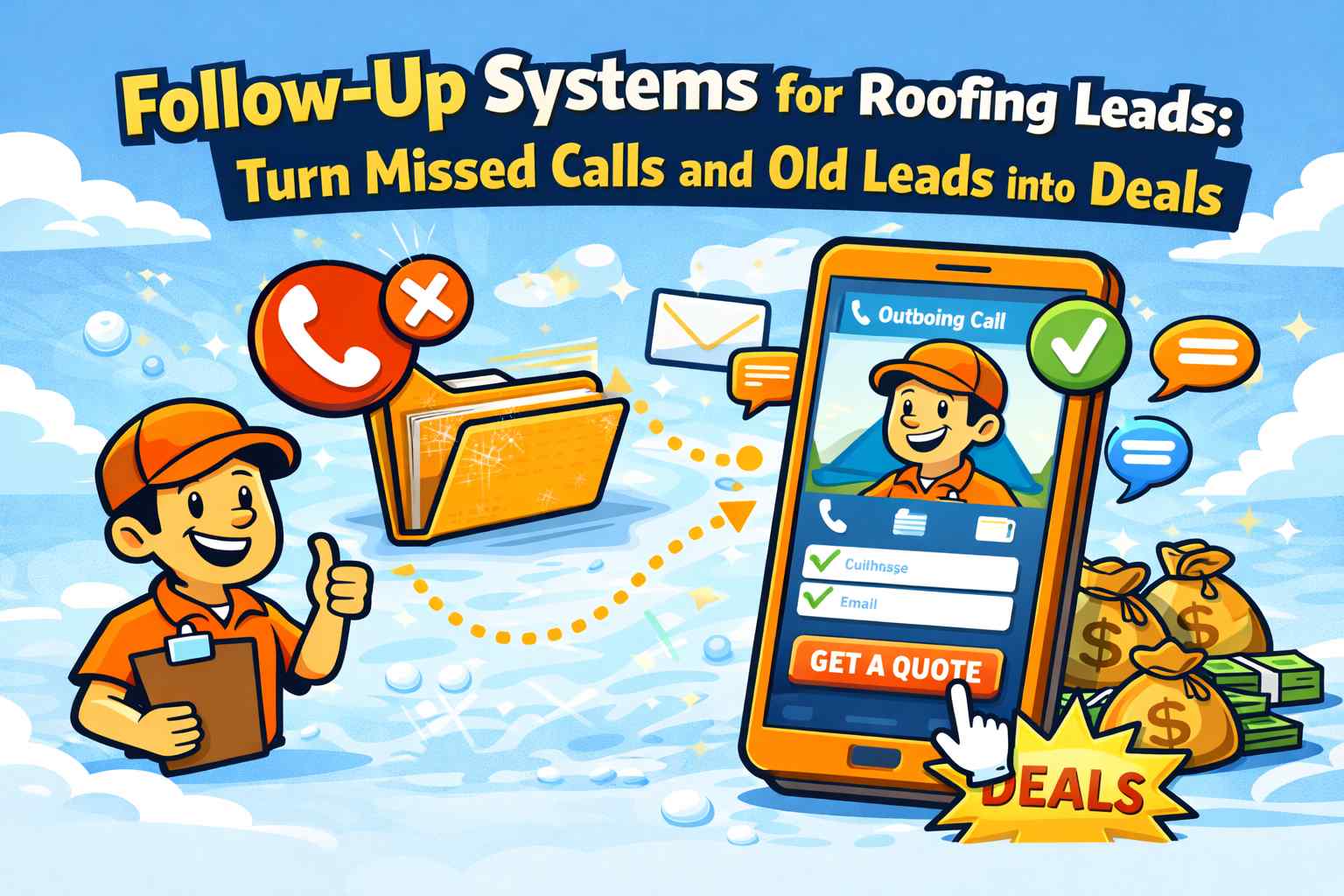
  • Follow-Up Systems for Roofing Leads: Turn Missed Calls and Old Leads into Deals

    Follow-Up Systems for Roofing Leads: Turn Missed Calls and Old Leads into Deals

    Most roofing companies don’t lose deals because of bad leads — they lose them because of poor follow-up. Missed calls, delayed callbacks, and forgotten estimates quietly kill revenue every month. A strong follow-up system ensures that every roofing lead gets multiple chances to turn into a signed contract.

    This article breaks down how to build follow-up systems that recover missed opportunities and increase close rates without buying more leads.

    Why Follow-Up Matters More Than Lead Volume

    Industry data consistently shows that the majority of roofing leads:

    • Don’t answer the first call
    • Need multiple touchpoints before deciding
    • Take days or weeks to move forward

    If your process stops after one or two attempts, you’re leaving money on the table.

    Improving follow-up often generates more revenue than increasing ad spend.

    The True Cost of Missed Calls

    Every missed call is a warm lead cooling off.

    Common causes include:

    • Calls coming in after hours
    • Sales reps on roofs or in meetings
    • No backup call handling
    • No voicemail or text follow-up

    Without a system, these leads rarely call back. With a system, they often convert.

    The Core Components of a Roofing Follow-Up System

    High-performing roofing companies use layered follow-up — not just phone calls.

    A complete system includes:

    • Immediate callback attempts
    • Automated text messages
    • Email follow-ups
    • Voicemail drops
    • Scheduled future touches

    These touches work together to stay top-of-mind without annoying prospects.

    Speed-to-Lead Still Matters — But It’s Not Everything

    Contacting a lead quickly increases conversion, but speed alone isn’t enough.

    Effective systems:

    • Attempt contact within 5 minutes
    • Follow up again within 24 hours
    • Continue follow-up for 14–30 days

    Consistency beats urgency over time.

    Text Messaging: The Most Underused Tool in Roofing

    Text messages outperform email for initial engagement.

    Best practices include:

    • Immediate “we missed your call” texts
    • Short, helpful messages
    • Clear next steps (schedule inspection, confirm time)

    Texts feel personal and non-intrusive, especially when calls go unanswered.

    Reviving Old Roofing Leads

    Old leads aren’t dead — they’re undecided.

    You can re-engage them by:

    • Offering seasonal inspections
    • Referencing previous estimates
    • Checking in after storms
    • Sharing updated availability

    Many roofing companies close deals from leads that are months old simply because they followed up when competitors didn’t.

    Follow-Up After the Inspection (Where Deals Are Won)

    The inspection-to-decision window is critical.

    Strong post-inspection follow-up includes:

    • Same-day recap texts or emails
    • Clear estimate timelines
    • Scheduled check-ins
    • Objection-handling messages

    Silence usually means uncertainty, not rejection.

    Automation Without Losing the Human Touch

    Automation doesn’t replace sales reps — it supports them.

    The best systems:

    • Automate the first touch
    • Alert reps when leads engage
    • Allow personalization at key moments

    This balance increases response rates without sounding robotic.

    How Follow-Up Systems Improve Lead ROI

    Better follow-up means:

    • Higher close rates
    • Lower cost per sale
    • Fewer wasted leads
    • More predictable revenue

    This is why follow-up is a core part of done-for-you lead systems like those offered at https://roofingleads.help/services/.

    Shared vs Exclusive Leads and Follow-Up

    Shared leads demand aggressive follow-up to win attention.

    Exclusive leads allow:

    • More thoughtful pacing
    • Education-based messaging
    • Higher trust

    Regardless of lead type, follow-up is what determines profit.

    Tracking Follow-Up Performance

    You can’t improve what you don’t track.

    Important metrics include:

    • Contact rate
    • Response rate by channel
    • Time to first response
    • Follow-up attempt count
    • Close rate by lead age

    These insights reveal exactly where deals are being lost.

    Scaling Follow-Up Across Multiple Markets

    If you operate in multiple cities, follow-up systems must be standardized.

    Benefits include:

    • Consistent customer experience
    • Easier rep training
    • Reliable performance across locations

    Multi-market setups often follow the structure shown at https://roofingleads.help/locations/.

    Learn More About Roofing Lead Systems

    Follow-up is only one part of the lead equation. When combined with strong traffic and funnel structure, it becomes a growth multiplier.

    More tactical breakdowns and system guides are available at https://roofingleads.help/blog/.

    How to Implement a Follow-Up System That Closes More Roofing Deals

    If missed calls and old leads are costing you revenue, the fix isn’t more advertising — it’s better follow-up.

    To build a follow-up system tailored specifically for roofing leads and sales cycles, book a strategy call here:
    https://roofingleads.help/contact-2/

    The roofing companies that grow fastest aren’t the ones with the most leads. They’re the ones that never stop following up.

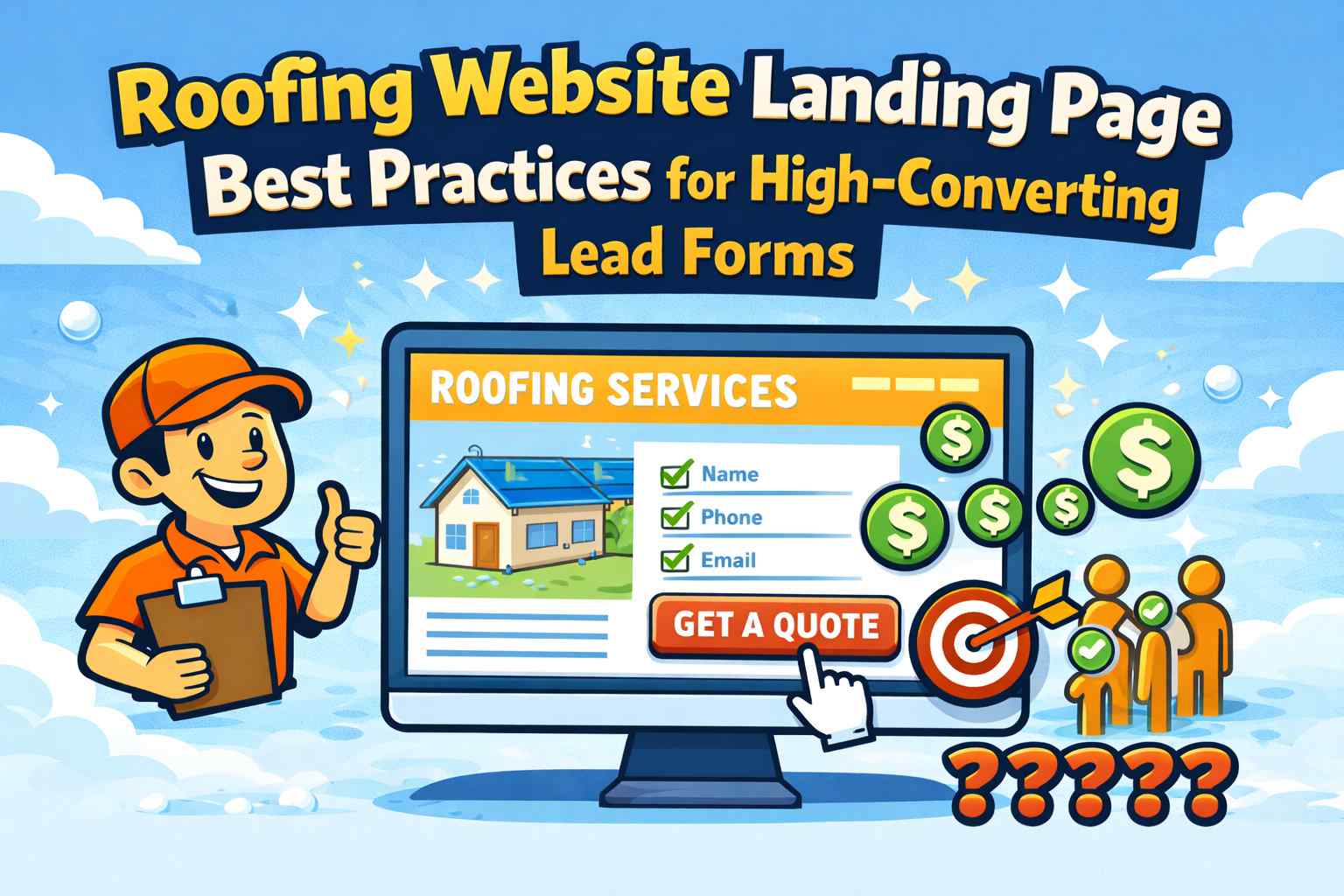
  • Roofing Website Landing Page Best Practices for High-Converting Lead Forms

    Roofing Website Landing Page Best Practices for High-Converting Lead Forms

    Your roofing website doesn’t fail because of traffic — it fails because visitors don’t convert. Even with strong SEO or paid ads, a poorly structured landing page can quietly kill your lead flow. High-converting roofing landing pages are built for one purpose: capturing qualified leads with as little friction as possible.

    This guide breaks down the best practices for roofing website landing pages that turn clicks into calls, form fills, and booked inspections.

    Why Roofing Landing Pages Are Different From Regular Websites

    Most roofing websites try to do too much:

    • Multiple services on one page
    • Long navigation menus
    • Competing calls to action

    A landing page is different. It has one goal, one audience, and one action. When done correctly, it becomes the engine that powers your entire lead generation system.

    Start With a Clear, Roofing-Specific Headline

    Your headline must immediately answer one question: “Am I in the right place?”

    Effective roofing landing page headlines:

    • Call out the service (repair, replacement, storm damage)
    • Mention the location or service area
    • Emphasize inspections or solutions, not sales pressure

    Avoid vague claims like “Best Roofing Company.” Specific beats clever every time.

    One Page, One Offer

    High-converting landing pages remove distractions.

    Best practices include:

    • No top navigation menus
    • No multiple service options
    • One primary call to action (request inspection, get estimate)

    If you want visitors to take action, don’t give them alternatives.

    Lead Form Design That Actually Converts

    Your lead form is the most important element on the page.

    Keep Forms Short and Focused

    Top-performing roofing forms usually ask for:

    • Name
    • Phone number
    • Address or ZIP code
    • Roof issue or service type

    Every extra field reduces conversion rate. You can gather more details after first contact.

    Make the CTA About Help, Not Sales

    Buttons like:

    • “Get a Free Inspection”
    • “Request Roof Assessment”
    • “Schedule an Inspection”

    Outperform generic “Submit” buttons consistently.

    Trust Signals Matter More Than You Think

    Roofing is a high-trust purchase.

    Landing pages should include:

    • Local service area mention
    • Licensing and insurance statements
    • Review snippets or badges
    • Brief explanation of what happens after submission

    This reduces anxiety and increases form completion.

    Mobile Optimization Is Non-Negotiable

    Most roofing leads come from mobile.

    High-converting mobile pages:

    • Load fast
    • Use click-to-call buttons
    • Keep forms visible without scrolling
    • Avoid tiny text or clutter

    A great desktop page that fails on mobile will underperform across the board.

    Match the Landing Page to the Traffic Source

    Conversion rates drop when messaging doesn’t match intent.

    Examples:

    • Storm ads → storm-specific landing pages
    • Commercial searches → commercial-focused pages
    • Maintenance searches → maintenance offers

    Generic pages convert poorly. This is why done-for-you funnels like those at https://roofingleads.help/services/ focus on dedicated landing pages per campaign.

    Follow-Up Is Part of the Landing Page Conversion

    The landing page doesn’t stop at the form submission.

    High-performing systems:

    • Trigger immediate confirmation texts
    • Set expectations for callbacks
    • Route leads to the right sales rep

    Landing pages and follow-up systems must work together to convert consistently.

    Track What Matters on Roofing Landing Pages

    If you don’t track performance, you can’t improve it.

    Key metrics include:

    • Conversion rate
    • Cost per lead
    • Form abandonment
    • Call vs form split

    Reviewing these numbers often reveals simple fixes that unlock more leads without more traffic.

    Common Roofing Landing Page Mistakes

    Avoid these conversion killers:

    • Long paragraphs of company history
    • Stock photos with no context
    • Multiple CTAs competing for attention
    • Hidden forms below the fold

    Clarity beats complexity every time.

    Scaling Landing Pages Across Multiple Locations

    If you serve multiple cities, each market needs its own landing page.

    Benefits include:

    • Higher local relevance
    • Better SEO performance
    • Stronger conversion rates

    You can see how multi-location structures are handled at https://roofingleads.help/locations/.

    Learn From High-Performing Roofing Funnels

    Landing pages don’t exist in isolation. They work best inside a full lead generation system that includes traffic, follow-up, and sales.

    For more tactical breakdowns, visit https://roofingleads.help/blog/.

    How to Build Landing Pages That Consistently Generate Roofing Leads

    High-converting roofing landing pages aren’t about flashy design — they’re about clarity, trust, and simplicity.

    If you want landing pages built specifically for roofing leads — not generic templates — book a strategy call here:
    https://roofingleads.help/contact-2/

    When your landing page does its job, every other part of your marketing works better.

  • How Many Roofing Leads Do You Need to Hit $100K per Month in Revenue?

    How Many Roofing Leads Do You Need to Hit $100K per Month in Revenue?

    Most roofing companies don’t have a lead problem — they have a math problem. If your goal is to reach $100,000 per month in revenue, the real question isn’t “How do I get more leads?” It’s “How many qualified roofing leads do I actually need, given my close rate and average job size?”

    This article breaks the numbers down clearly so you can plan growth based on reality, not guesswork.

    Start With Your Average Roofing Job Size

    The first variable is your average contract value.

    Typical monthly revenue targets look like this:

    • $100K with $10K average jobs = 10 jobs per month
    • $100K with $8K average jobs = 13 jobs per month
    • $100K with $5K average jobs = 20 jobs per month

    Higher job values dramatically reduce the lead volume required. This is one reason many contractors focus on insurance, commercial, or premium residential work.

    Know Your Close Rate (Most Roofers Don’t)

    Your close rate is the percentage of leads that turn into signed contracts.

    Common ranges:

    • 15–20% = low-performing funnel
    • 25–35% = average, stable operation
    • 40%+ = strong sales process with qualified leads

    If you don’t know this number, you’re flying blind. Improving close rate often produces more revenue than doubling lead volume.

    The Roofing Lead Math (Simple but Powerful)

    Let’s use a realistic example:

    • Average job size: $8,000
    • Target revenue: $100,000
    • Jobs needed: ~13 per month
    • Close rate: 25%

    To close 13 jobs at a 25% close rate, you need:

    52 qualified roofing leads per month

    If your close rate improves to 35%, that drops to:

    • ~37 leads per month

    If your average job size increases, lead needs drop even further.

    This is why lead quality and funnel structure matter more than raw volume.

    Why “More Leads” Is Usually the Wrong Goal

    Many roofing companies chase volume because:

    • They’re using shared leads
    • Their funnel leaks after inspections
    • Follow-up is inconsistent

    Adding more leads to a broken system just increases chaos.

    Instead, focusing on better-qualified, exclusive leads — like those generated through systems at https://roofingleads.help/services/ — often reduces the total lead count needed to hit revenue goals.

    Residential vs Commercial Lead Volume Requirements

    Lead requirements vary by market.

    Residential roofing:

    • Higher lead volume
    • Shorter sales cycle
    • Lower average job value

    Commercial roofing:

    • Fewer leads needed
    • Longer sales cycle
    • Higher contract values

    This is why many companies blend both models. Commercial content and funnels are often discussed in more depth at https://roofingleads.help/blog/.

    The Hidden Multiplier: Follow-Up

    Most roofers underestimate how many deals are lost due to poor follow-up.

    If you:

    • Miss calls
    • Don’t text back
    • Don’t follow up after estimates

    Your lead requirement skyrockets.

    Strong follow-up systems can:

    • Increase close rate by 10–20%
    • Reduce lead volume needed
    • Improve ROI without spending more on ads

    Lead Ownership Changes the Equation

    Shared leads force you to:

    • Compete on speed
    • Compete on price
    • Accept lower close rates

    Exclusive leads allow:

    • Structured follow-up
    • Trust-based selling
    • Higher close rates

    Owning your lead funnel often means you need fewer leads to reach $100K, not more.

    Local Market Factors Matter

    Market competition, average home values, and insurance prevalence all affect lead math.

    If you operate in multiple cities or plan to expand, location-specific funnels help normalize performance across markets. You can see how this is handled at https://roofingleads.help/locations/.

    A Realistic Monthly Roofing Lead Range

    For most growing roofing companies aiming for $100K/month:

    • 30–60 qualified leads per month is typical
    • Less if job size or close rate is high
    • More if leads are shared or poorly qualified

    The exact number depends on your funnel — not just your ambition.

    How to Build a Lead Plan That Actually Works

    Instead of asking “How many leads do I need?” ask:

    • What’s my average job size?
    • What’s my real close rate?
    • Where does my funnel leak?
    • How can I increase lead quality?

    If you want help mapping this out for your business, book a strategy call here:
    https://roofingleads.help/contact-2/

    Hitting $100K per month in roofing revenue isn’t about flooding your business with leads. It’s about building a system where every lead has a clear path to becoming a contract.

  • Storm Damage Roofing Leads: How to Dominate Your Market After a Hail or Wind Event

    Storm Damage Roofing Leads: How to Dominate Your Market After a Hail or Wind Event

    Storm damage creates one of the biggest revenue opportunities in roofing — but only for companies that are prepared before the storm hits. When hail or wind damage affects a market, demand spikes fast, competition floods in, and homeowners are overwhelmed with calls. The roofing companies that dominate storm damage leads are the ones with systems, speed, and visibility already in place.

    This guide explains how to capture storm damage roofing leads ethically, efficiently, and profitably after a hail or wind event.

    Why Storm Damage Leads Are a Race Against Time

    After a major storm:

    • Homeowners search immediately for help
    • Insurance timelines start ticking
    • Out-of-town contractors flood the market
    • Trust becomes the deciding factor

    If your roofing business isn’t visible in the first 24–72 hours, you’re already behind.

    Pre-Storm Setup: How Winners Prepare Before the Event

    The biggest mistake roofers make is waiting for the storm.

    Market-dominating companies:

    • Build storm-specific service pages in advance
    • Set up tracking and call routing
    • Prepare inspection and follow-up workflows
    • Have scripts ready for insurance conversations

    This preparation allows you to capture leads the moment searches spike. Systems like those outlined at https://roofingleads.help/services/ are designed for this kind of rapid-response lead generation.

    SEO for Storm Damage Roofing Leads

    Search behavior changes dramatically after a storm.

    High-intent storm keywords include:

    • Hail damage roof repair
    • Wind damage roof inspection
    • Insurance roof claim help
    • Emergency roof repair

    Having optimized pages already indexed gives you a massive advantage. Storm-focused blog content also supports these pages and builds authority. More examples can be found at https://roofingleads.help/blog/.

    Paid Ads That Work After Hail or Wind Events

    Paid ads can be extremely effective — if deployed correctly.

    Best practices include:

    • Turning on storm-specific campaigns immediately
    • Using location targeting around affected areas
    • Messaging focused on inspections, not sales
    • Filtering low-intent clicks with clear copy

    Speed matters, but so does discipline. Poorly targeted storm ads can burn budget fast.

    How to Convert Storm Damage Leads Without Burning Trust

    Storm-affected homeowners are stressed and skeptical.

    High-converting funnels:

    • Offer free inspections, not pressure
    • Educate homeowners on the insurance process
    • Provide documentation and photos
    • Set clear expectations for next steps

    Your goal is to become the trusted guide, not just the fastest caller.

    Insurance vs Retail Storm Leads

    Not all storm leads are the same.

    Insurance-driven leads:

    • Require education and patience
    • Involve adjusters and documentation
    • Often result in higher-value jobs

    Retail storm leads:

    • Move faster
    • Are more price-sensitive
    • May not involve claims

    Your funnel should separate these paths early to avoid confusion and frustration.

    Why Exclusive Storm Leads Win Every Time

    Shared storm leads create chaos:

    • Multiple roofers calling the same homeowner
    • Aggressive sales tactics
    • Race-to-the-bottom pricing
    • Brand damage

    Exclusive storm leads allow:

    • Controlled follow-up
    • Better homeowner experience
    • Higher close rates
    • Stronger long-term reputation

    This is why serious storm operators avoid lead marketplaces and focus on owned systems.

    Local Presence Is Critical During Storm Events

    Homeowners trust local roofers first.

    Effective storm strategies include:

    • City- or neighborhood-specific storm pages
    • Clear service area coverage
    • Proof of local experience and jobs

    If you operate in multiple markets, location-based storm funnels can be structured like those shown at https://roofingleads.help/locations/.

    Tracking Storm Lead Performance

    Storm lead generation moves fast, but tracking still matters.

    Key metrics include:

    • Time to first contact
    • Inspection set rate
    • Claim approval rate
    • Close rate
    • Average storm job value

    Without tracking, it’s impossible to know what worked — or to repeat it next season.

    Post-Storm Follow-Up Is Where Profit Is Made

    Many storm leads don’t convert immediately.

    Smart operators:

    • Follow up after inspections
    • Stay in touch during insurance delays
    • Re-engage leads weeks later
    • Build a list for future storms

    The storm may pass, but the opportunity doesn’t have to.

    How to Win Storm Damage Roofing Leads in Your Market

    Dominating storm damage roofing leads isn’t about being aggressive — it’s about being prepared, visible, and trustworthy.

    If you want a storm-ready lead system built specifically for roofing — before the next hail or wind event hits — book a strategy call here:
    https://roofingleads.help/contact-2/

    The roofing companies that win storms don’t chase leads after the fact. They build systems that capture them when it matters most.

  • Commercial Roofing Leads: How to Attract Property Managers and Facility Owners

    Commercial Roofing Leads: How to Attract Property Managers and Facility Owners

    Commercial roofing leads don’t behave like residential leads. Property managers, facility owners, and asset managers aren’t impulse buyers — they’re risk managers. If your lead generation strategy is built like a residential funnel, you’ll struggle to attract serious commercial opportunities.

    This guide breaks down how commercial roofing leads are actually generated, what decision-makers care about, and how to position your company to win higher-value commercial contracts.

    Why Commercial Roofing Leads Are Different

    Commercial buyers think in terms of:

    • Long-term asset protection
    • Budget cycles and approvals
    • Documentation and compliance
    • Vendor reliability and safety

    Unlike homeowners, they rarely fill out generic “free quote” forms. Your marketing and sales systems must signal professionalism and competence immediately.

    Who You’re Really Marketing To

    “Commercial roofing leads” usually come from multiple roles, including:

    • Property managers overseeing multiple sites
    • Facility managers responsible for maintenance
    • Asset managers protecting portfolio value
    • Owners of industrial, retail, or office buildings

    Your messaging should speak to risk reduction, lifecycle cost, and process, not just price.

    Where High-Quality Commercial Roofing Leads Come From

    The strongest commercial leads typically come from owned channels, not marketplaces.

    SEO for Commercial Roofing

    Commercial SEO focuses on:

    • Service-specific pages (flat roof replacement, coatings, maintenance)
    • Industry-specific language
    • Location-based commercial pages for each market

    Unlike residential SEO, commercial pages must emphasize systems, safety, and experience. This is where structured service pages like those at https://roofingleads.help/services/ become important.

    Paid Traffic (Used Carefully)

    Paid ads can work for:

    • Emergency commercial repairs
    • Targeted remarketing
    • Brand reinforcement

    However, broad “commercial roofing” ads often attract unqualified traffic unless your funnel filters aggressively.

    How to Structure a Funnel That Converts Commercial Leads

    Commercial roofing funnels must slow down the process — not rush it.

    A strong funnel includes:

    • A professional landing page (not a generic contact form)
    • Clear explanation of process and scope
    • Emphasis on inspections, reports, and recommendations
    • Multi-touch follow-up over weeks or months

    This approach builds trust and aligns with how property managers actually buy.

    Content That Attracts Property Managers

    Educational content is one of the most effective ways to generate commercial roofing leads.

    High-performing content topics include:

    • Roof lifecycle planning
    • Maintenance vs replacement comparisons
    • Budget forecasting for roof assets
    • Preventative maintenance programs
    • Compliance and safety standards

    Publishing this type of content positions your company as a long-term partner, not just another bidder. More examples of this strategy can be found at https://roofingleads.help/blog/.

    Local Presence Still Matters in Commercial Roofing

    Even national property managers prefer local contractors.

    Effective strategies include:

    • Location-specific commercial pages
    • Market-specific case studies
    • Local compliance and code references

    If you operate in multiple regions, building out location-based funnels helps commercial buyers feel confident you understand their market. You can see how this is structured at https://roofingleads.help/locations/.

    Why Shared Leads Don’t Work for Commercial Roofing

    Shared commercial leads are rarely effective because:

    • Projects are complex and slow-moving
    • Multiple stakeholders are involved
    • Price isn’t the only decision factor
    • Trust matters more than speed

    Commercial roofing almost always requires exclusive lead ownership and a controlled sales process.

    Tracking What Matters in Commercial Lead Generation

    For commercial leads, success isn’t measured by volume.

    Key metrics include:

    • Qualified lead rate
    • Inspection-to-proposal ratio
    • Proposal-to-contract close rate
    • Average contract value
    • Sales cycle length

    Tracking these metrics helps refine both marketing and sales without relying on guesswork.

    When to Use a Commercial Roofing Lead System

    If your company wants:

    • Fewer but larger projects
    • Predictable commercial opportunities
    • Less price competition
    • Better long-term clients

    Then building or adopting a commercial-focused lead system is critical. Many contractors work with providers like https://roofingleads.help/services/ to avoid building these systems from scratch.

    How to Get Started with Commercial Roofing Leads

    Commercial roofing leads require patience, positioning, and systems — but the payoff is larger contracts and more stable revenue.

    If you want help attracting property managers and facility owners instead of chasing low-quality leads, book a strategy call here:
    https://roofingleads.help/contact-2/

    The commercial roofing companies that win don’t rely on luck or marketplaces. They build trust-driven lead systems designed for how commercial buyers actually make decisions.

  • Exclusive Roofing Leads vs Shared Leads: Which Model Makes You More Profit?

    Exclusive Roofing Leads vs Shared Leads: Which Model Makes You More Profit?

    If you’re paying for roofing leads and wondering why your close rate is inconsistent, the problem may not be your sales team — it may be the lead model itself. One of the biggest decisions roofing companies face is choosing between exclusive roofing leads and shared leads. Each model works very differently, and the wrong choice can quietly drain your profit.

    This guide breaks down how each lead type actually performs in real roofing businesses and which model tends to produce higher margins over time.

    What Are Exclusive Roofing Leads?

    Exclusive roofing leads are sold to one contractor only. When a homeowner or property manager submits their information, you’re the only roofing company that receives it.

    Common traits of exclusive leads:

    • No competition calling the same prospect
    • Higher contact and appointment rates
    • More control over pricing and sales process
    • Typically higher cost per lead

    Exclusive leads are often tied to SEO-driven traffic, dedicated landing pages, or owned advertising funnels — not mass marketplaces.

    What Are Shared Roofing Leads?

    Shared leads are sold to multiple roofing contractors at the same time. The same homeowner inquiry may go to three, five, or even more companies.

    Common traits of shared leads:

    • Lower upfront cost per lead
    • Immediate price competition
    • Lower contact and close rates
    • Heavy reliance on speed-to-call and discounting

    Many roofing companies start here because shared leads feel cheaper — but cost per lead doesn’t equal cost per sale.

    The Real Profit Difference: Cost Per Contract

    To decide which model is more profitable, you have to look past lead price and focus on cost per closed job.

    Shared Lead Economics

    Shared leads often look like this:

    • Lower lead cost
    • Lower contact rate
    • Lower close rate
    • Higher time spent chasing leads
    • Pressure to undercut competitors

    In practice, many shared-lead buyers end up paying more per signed contract once wasted time and missed opportunities are factored in.

    Exclusive Lead Economics

    Exclusive leads typically deliver:

    • Higher contact rates
    • Higher appointment set rates
    • Stronger trust from the start
    • Less price shopping
    • Higher average job value

    This is why many established roofing companies shift away from shared models as they grow. Done-for-you systems like those offered through https://roofingleads.help/services/ are built specifically around exclusive lead ownership.

    How Lead Type Impacts Your Sales Funnel

    Lead model directly affects how your sales funnel performs.

    With shared leads:

    • Follow-up must be immediate and aggressive
    • Sales scripts are reactive
    • Objections are mostly price-based
    • Many leads go cold quickly

    With exclusive leads:

    • Follow-up can be structured and consultative
    • Funnel steps are predictable
    • Trust is easier to establish
    • Long-term nurture becomes viable

    If you’ve built a proper roofing sales funnel, exclusive leads usually compound in value instead of burning out.

    Residential vs Commercial Roofing: Lead Model Differences

    The right model also depends on the type of roofing work you do.

    Residential roofing:

    • Shared leads can work for high-volume, fast-moving teams
    • Exclusive leads work better for premium, insurance, or retail jobs

    Commercial roofing:

    • Shared leads are rarely effective
    • Exclusive leads are almost always required
    • Decision cycles are longer and competition is relationship-based

    If you serve multiple markets or regions, lead ownership becomes even more important. You can see how location-specific strategies differ at https://roofingleads.help/locations/.

    Hidden Costs Most Roofers Miss

    Many contractors only track lead price, not:

    • Missed calls
    • Unreturned voicemails
    • Sales rep time
    • Opportunity cost of bad leads
    • Brand damage from rushed calls

    Shared leads amplify these hidden costs. Exclusive leads reduce them by design.

    This is a major reason many roofing companies eventually abandon lead marketplaces in favor of owned funnels.

    Which Roofing Lead Model Is Right for You?

    Shared leads may make sense if:

    • You’re just starting out
    • You need immediate volume
    • You have strong call coverage
    • You’re competing primarily on price

    Exclusive leads are usually better if:

    • You want predictable revenue
    • You care about profit per job
    • You want to build long-term brand equity
    • You plan to scale beyond one market

    If you’re unsure, reviewing your funnel metrics can make the decision obvious.

    How to Transition from Shared to Exclusive Roofing Leads

    Moving away from shared leads doesn’t require flipping a switch overnight.

    Common transition steps:

    • Keep shared leads short-term while building owned traffic
    • Invest in SEO and branded search
    • Build dedicated landing pages and tracking
    • Shift sales scripts from price-first to value-first

    Many contractors start this process by learning more through guides at https://roofingleads.help/blog/.

    Final Verdict: Profit Favors Ownership

    Shared leads can create short-term wins, but exclusive leads usually produce higher profit, better close rates, and more control as your roofing business matures.

    If you want to see what exclusive roofing leads look like in practice — or want help replacing shared leads with a system you actually own — book a strategy call here:
    https://roofingleads.help/contact-2/

    The most profitable roofing companies don’t just buy leads. They build lead systems they control.

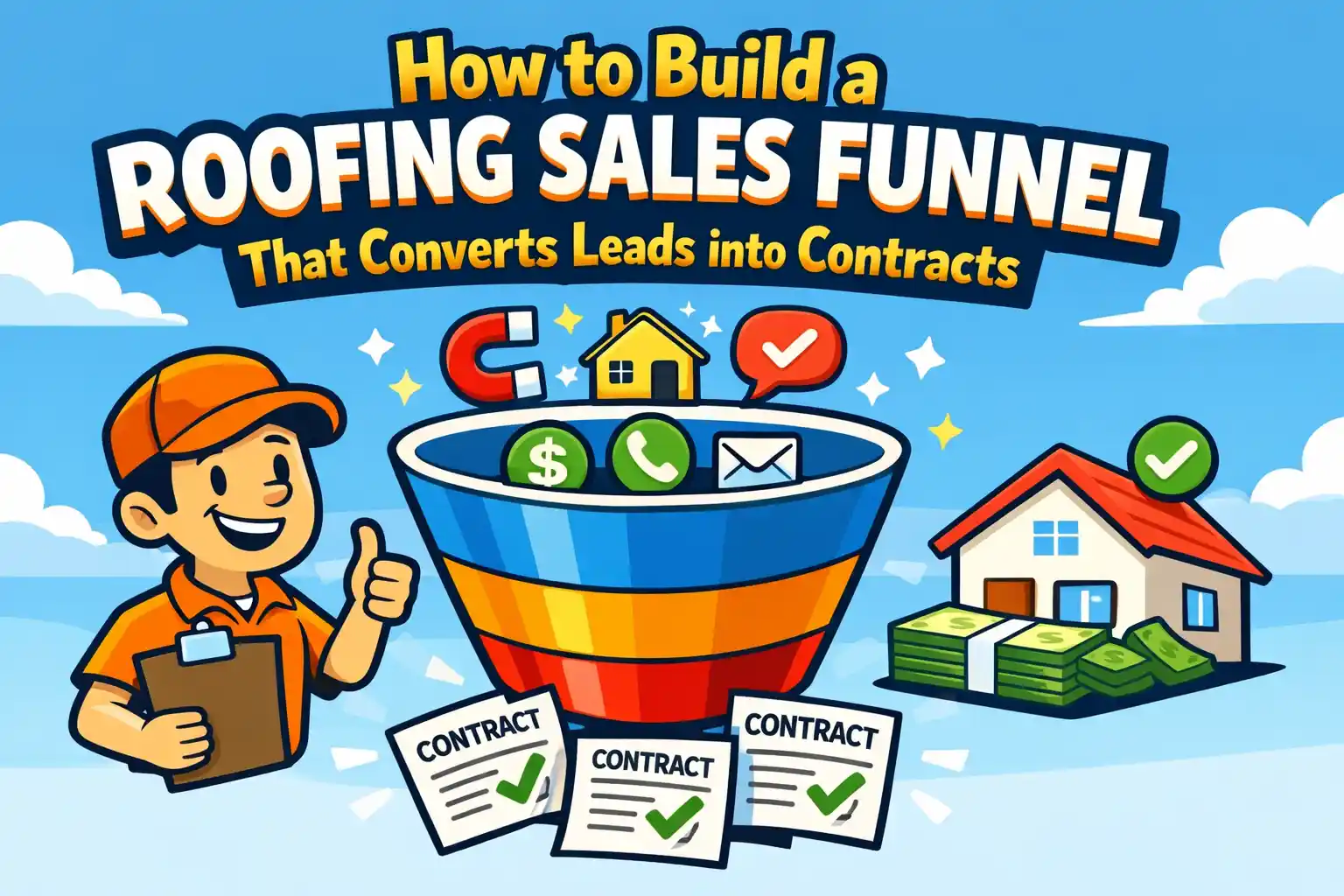
  • How to Build a Roofing Sales Funnel That Converts Leads into Contracts

    How to Build a Roofing Sales Funnel That Converts Leads into Contracts

    If you’re generating roofing leads but struggling to turn them into signed contracts, the problem usually isn’t lead volume — it’s your sales funnel. Many roofing companies rely on disconnected tactics: ads without follow-up, calls without tracking, and estimates without a clear close process. A high-converting roofing sales funnel fixes this by guiding every lead from first click to signed agreement with intention and structure.

    Below is a practical, roofing-specific breakdown of how to build a sales funnel that actually converts leads into revenue.

    What a Roofing Sales Funnel Really Is (And What It Isn’t)

    A roofing sales funnel is not just ads → phone call → estimate. It’s a system that:

    • Captures demand from homeowners or property managers
    • Qualifies leads before wasting sales time
    • Creates trust before the inspection
    • Follows up until a decision is made
    • Tracks every step so nothing slips through the cracks

    If your funnel relies entirely on reps “just calling back fast,” it’s fragile and inconsistent.

    Step 1: Attract the Right Roofing Leads at the Top of the Funnel

    The funnel starts long before a phone rings.

    High-quality roofing funnels usually combine:

    • SEO pages targeting buyer-intent keywords (e.g. roof replacement, roof repair, commercial roofing)
    • Paid traffic like Google Ads or Local Services Ads
    • Location-specific pages for each market you serve

    The key is intent. Traffic should come from people actively looking for roofing services — not general home improvement browsers.

    This is where done-for-you systems from https://roofingleads.help/services/ are designed to help, especially if you want leads that are already primed to buy.

    Step 2: Capture Leads with Clear, Focused Entry Points

    Once someone lands on your site, your funnel needs to capture them immediately.

    High-converting roofing funnels typically use:

    • Short quote forms (name, phone, address, roof type)
    • Click-to-call buttons for mobile users
    • Dedicated landing pages (not your homepage)

    Avoid overwhelming visitors. One page, one action. If they want more info later, you can provide it after the lead is captured.

    Step 3: Qualify Roofing Leads Before Your Sales Team Engages

    Not every lead deserves the same amount of sales effort.

    Before a rep spends time driving out or preparing a proposal, your funnel should identify:

    • Residential vs commercial
    • Insurance vs retail
    • Emergency vs non-urgent
    • Budget expectations (when possible)

    Simple qualification steps reduce wasted appointments and improve close rates. This is where many roofing companies lose money by treating every lead equally.

    Step 4: Speed-to-Lead and First Contact Strategy

    Speed matters — but structure matters more.

    Best-performing roofing funnels:

    • Contact new leads within 5 minutes
    • Use a consistent call script
    • Set expectations for the inspection process
    • Confirm appointments via text and email

    Leads who don’t answer immediately shouldn’t be dropped. Automated follow-up (texts, emails, voicemails) keeps your company top-of-mind without burning sales time.

    Step 5: The Inspection-to-Estimate Bridge (Where Most Funnels Break)

    Most roofing funnels fail between inspection and estimate.

    To fix this:

    • Send a recap after the inspection (photos, notes, next steps)
    • Set a clear timeline for the estimate delivery
    • Explain how decisions are made (insurance approval, financing, timelines)

    This step builds trust and prevents the “we went with someone else” response.

    Step 6: Follow-Up That Actually Closes Roofing Deals

    The majority of roofing contracts are not signed on the first estimate.

    A converting funnel includes:

    • Scheduled follow-ups (24 hours, 3 days, 7 days)
    • Objection-handling sequences (price, timing, insurance confusion)
    • Clear calls to action in every follow-up

    Silence usually means uncertainty — not rejection. Your funnel should address that automatically.

    Step 7: Track Funnel Metrics That Matter

    If you don’t track your funnel, you can’t improve it.

    Key roofing sales funnel metrics:

    • Cost per lead
    • Contact rate
    • Appointment set rate
    • Close rate
    • Revenue per lead

    When these numbers are visible, you can quickly identify whether the issue is traffic, sales, or follow-up. Many roofing companies use insights like these to decide when to scale or optimize with professional help.

    Residential vs Commercial Roofing Funnels Aren’t the Same

    Residential funnels emphasize:

    • Speed
    • Trust
    • Financing and insurance clarity

    Commercial funnels emphasize:

    • Longer nurturing
    • Multiple decision-makers
    • Documentation and professionalism

    If you’re serving multiple markets, your funnel should adapt. This is often covered in deeper guides available through https://roofingleads.help/blog/.

    When to Build In-House vs Use a Proven Roofing Funnel

    Building your own funnel takes time, testing, and technical setup. For many roofing companies, the faster path is plugging into a proven system that already works across markets.

    If you want a sales funnel built specifically for roofing — not generic marketing — exploring https://roofingleads.help/services/ can save months of trial and error.

    How to Get Started with a Roofing Sales Funnel That Converts

    If your leads aren’t turning into contracts, the fix isn’t more leads — it’s a better funnel.

    The fastest way to identify gaps in your current process is to step back and map it end-to-end. If you want expert help reviewing or building your roofing sales funnel, book a strategy call here:
    https://roofingleads.help/contact-2/

    If you operate in multiple cities or plan to expand, you can also see how location-based funnels are structured at:
    https://roofingleads.help/locations/

    A roofing sales funnel isn’t about pressure or gimmicks. It’s about guiding the right leads, through the right steps, until signing a contract feels like the obvious next move.

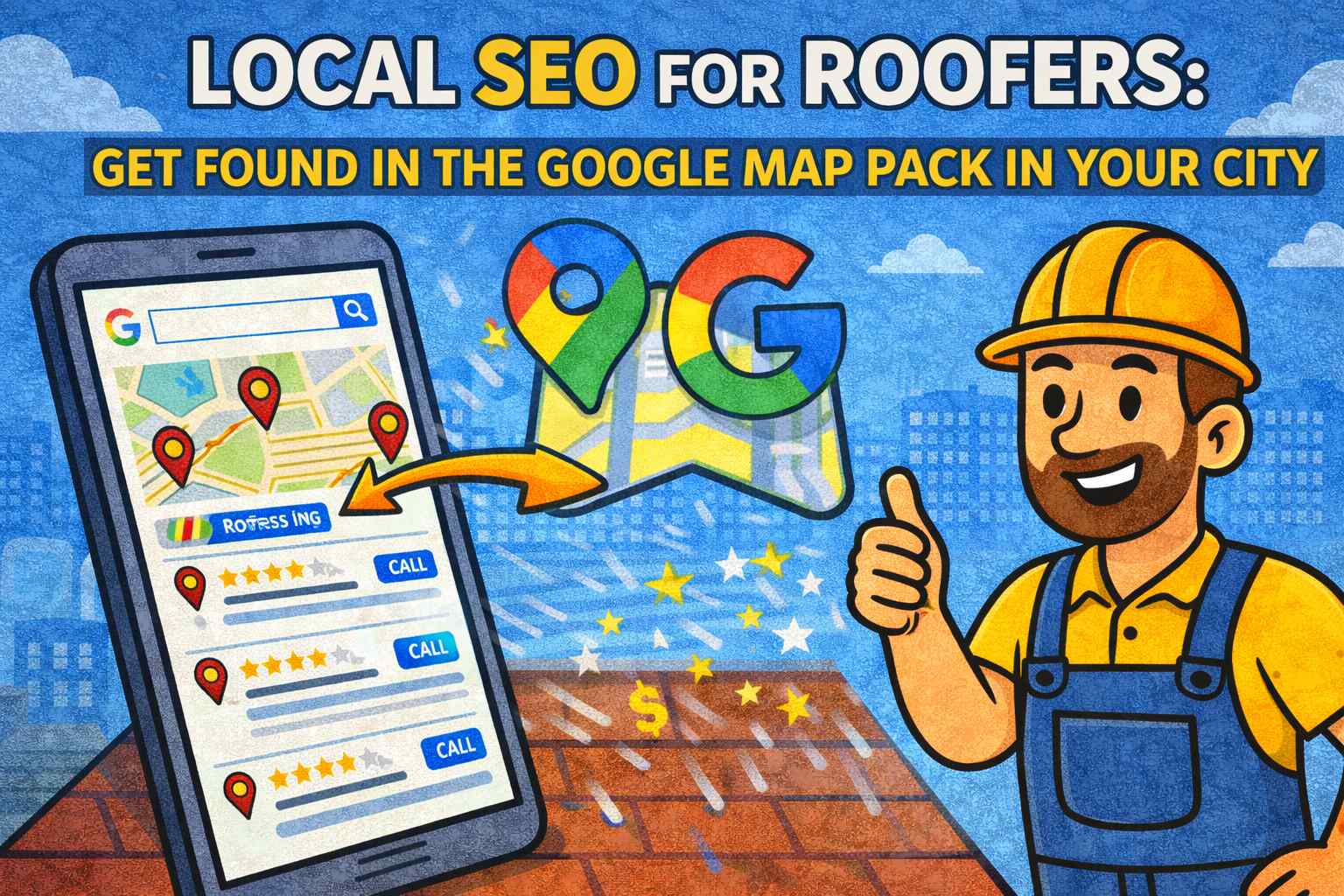
  • Local SEO for Roofers: Get Found in the Google Map Pack in Your City

    Local SEO for Roofers: Get Found in the Google Map Pack in Your City

    When a homeowner types “roof repair near me” or “roofer in [your city],” Google usually shows a small map with three local roofing companies at the top. That “3-pack” is the Google Map Pack—and if you’re not in it, you’re invisible for a huge chunk of high-intent searches.

    Local SEO is how you show up there consistently.

    In this guide, we’ll walk through how roofing companies can use local SEO to rank in the Map Pack, get more local calls, and turn searchers into booked jobs. If you’d rather have a done-for-you system, you can see how we help contractors with that here:
    https://roofingleads.help/services/


    Why the Google Map Pack Matters So Much for Roofers

    The Map Pack is prime real estate for roofers because:

    • People searching are usually ready to hire, not just researching
    • It shows local results, matching your service area
    • On mobile, the Map Pack often appears above regular organic listings
    • It prominently displays your reviews, phone number, and address

    Showing up here can mean:

    • More emergency leak repair calls
    • More quote requests for replacements
    • More opportunities for commercial and HOA work in your area

    Local SEO is all about sending Google clear, consistent signals: who you are, where you work, and what you’re best at.


    Step 1 – Set Up and Optimize Your Google Business Profile

    Your Google Business Profile (GBP) is the foundation of local SEO. If this isn’t fully optimized, you’re leaving money on the table.

    Claim and verify your listing

    If you haven’t already:

    • Search your business name in Google
    • Claim or create your profile
    • Complete the verification (usually a postcard, phone, or email)

    Fill out every section properly

    Key areas to get right:

    • Business name
      Use your real business name (avoid keyword stuffing in the name).
    • Primary category
      Use “Roofer” (or the closest match) as your primary category.
    • Additional categories (if relevant)
      Examples: “Roofing contractor,” “Siding contractor,” “Gutter cleaning service.”
    • Phone number
      Use a local number when possible. Make sure it matches your website.
    • Website URL
      Point to a strong page that converts visitors into leads—often your main service page or a city-specific page.
    • Service areas
      Add cities and regions you actually serve. These should line up with how you present your markets on your site, similar to:
      https://roofingleads.help/locations/
    • Hours
      Accurate business hours, including special hours in storm season if applicable.

    Add services, description, and photos

    • Business description
      Explain who you are, what you do, and where you work. Mention your key services (roof repair, replacement, commercial roofing, emergency leaks) and cities.
    • Services
      Add your main roofing services. This supports both search relevance and customer clarity.
    • Photos & videos
      Upload real photos: crews on jobs, finished roofs, equipment, office/yard, trucks with logos, before/after shots.

    A fully built-out GBP is one of the fastest ways to improve your chances of showing up in the Map Pack for searches in your service area.


    Step 2 – Build Strong Location & Service Area Pages on Your Website

    Google doesn’t just rely on your GBP—it checks whether your website backs up the local signals.

    Create a clear locations structure

    On your site, you should have a structure similar to a Locations hub, like:
    https://roofingleads.help/locations/

    From that hub, link to individual pages such as:

    • “Roofing Contractor in [City]”
    • “Roof Repair in [City]”
    • “Commercial Roofing in [City]”

    Each city or service area page should:

    • Clearly mention the city or region in the H1 and throughout the copy
    • Talk about the types of roofs and projects common in that area
    • Show local photos and testimonials where possible
    • Include your phone number and a strong call-to-action form

    Keep your NAP consistent

    NAP = Name, Address, Phone.

    • Make sure your business name, address, and phone number on your website match exactly what’s in your Google Business Profile.
    • Use the same formatting everywhere (no random abbreviations or variations).

    Consistency is a big trust signal for Google and helps your Map Pack rankings.


    Step 3 – Get More (and Better) Reviews in Your City

    Reviews are a huge factor in the Map Pack—not just how many, but how consistent and recent they are.

    Build a simple review system

    After every completed job, especially in key target cities:

    1. Ask your customer if they’re happy
    2. If yes, send them a direct review link to your Google profile
    3. Make it easy: text or email the link while you’re still on site or right after

    You can create a short review “script” for your team so they’re not guessing what to say.

    Respond to all reviews

    • Thank people for positive reviews and mention the city or neighborhood they’re in when appropriate.
    • Respond calmly and professionally to negative reviews—don’t argue.

    Consistent reviews across your service areas support both rankings and conversion. People choosing between 2–3 roofers in the Map Pack often pick the one with the best and most recent reviews.


    Step 4 – On-Page Local SEO Basics for Your Roofing Website

    Your site’s content and structure help Google understand where you should rank.

    Optimize your core service pages

    You should have clear, well-structured pages for your main services, like:

    • Roof replacement
    • Roof repair
    • Storm and hail damage
    • Commercial roofing
    • Maintenance and inspections

    These pages should:

    • Use city and region references where appropriate
    • Clearly explain your process, timeline, and what makes you different
    • Include strong CTAs to call or request a quote

    If you want a feel for how to structure service-focused content, check out:
    https://roofingleads.help/services/

    Use local keywords naturally

    On your service and city pages, use phrases like:

    • “roof replacement in [City]”
    • “emergency roof repair in [City]”
    • “commercial flat roofing services in [City/Region]”

    Don’t stuff the same phrase over and over. Write like a human first, and make sure the location references feel natural.


    Step 5 – Local Citations and Directories (Without Going Overboard)

    Local citations are mentions of your business name, address, and phone on other websites (directories, local business listings, etc.).

    Focus on the important ones first

    Start with:

    • Google Business Profile
    • Bing Places
    • Apple Maps
    • Yelp
    • Facebook business page
    • Local chamber of commerce or business associations
    • Major industry/home services sites in your country

    Make sure your NAP is identical to what’s on your website and GBP.

    You don’t need thousands of random low-quality directory listings. A strong, consistent base of key citations is enough to support your Map Pack rankings.


    Step 6 – Use Content to Target Local Searches

    Your blog and educational content can support local SEO and Map Pack performance.

    Create local-focused content

    Examples:

    • “Roof Replacement Costs in [City]: What Homeowners Should Expect”
    • “Hail Damage Roof Checklist for Homeowners in [Region]”
    • “Flat Roof Maintenance Tips for Commercial Buildings in [City]”
    • “Winter Roof Maintenance Guide for [City/Region] Homeowners”

    Each article can:

    • Mention your service areas
    • Link back to your city/service pages
    • Answer the questions your customers actually ask

    You can build this content out systematically, similar to how we publish roofing lead generation articles and marketing guides on:
    https://roofingleads.help/blog/

    Over time, this builds authority and supports your local rankings.


    Step 7 – Use GBP Posts and Photos to Stay Active

    Google pays attention to how active and complete your profile is.

    Regularly post updates

    Use Google Business Profile posts for:

    • Storm alerts and inspection offers
    • Seasonal maintenance reminders
    • Recent project highlights
    • Special promotions or financing options

    These posts don’t need to be long, but they should be relevant and local. Think “mini-ads” that help both your visibility and your conversions.

    Add new photos regularly

    • Upload in-progress and completed job photos
    • Show crews working safely and professionally
    • Highlight different neighborhoods and cities you serve

    Fresh visuals send good signals to both Google and potential customers.


    Step 8 – Track Your Local SEO and Map Pack Results

    You can’t improve what you don’t track.

    Watch your key metrics

    Use a mix of:

    • Google Business Profile Insights (views, calls, direction requests, website clicks)
    • Call tracking numbers for local campaigns
    • Website analytics showing traffic from local queries and city pages

    Watch trends over time:

    • Are views from your target cities going up?
    • Are you getting more calls directly from your profile?
    • Which location pages are driving the most leads?

    The goal is not just ranking—it’s leads and jobs in the right areas.


    When to Get Help With Local SEO for Your Roofing Company

    Local SEO takes time and consistency. It might be time to bring in help if:

    • You’ve set up your Google Business Profile but are still buried in search results
    • You don’t have clear, consistent city/service pages on your website
    • You’re not getting many calls from organic or Map Pack results
    • You want to expand into new cities or commercial work and need a localized strategy

    A good roofing-focused partner will:

    • Clean up and optimize your GBP
    • Build or refine your location and service pages
    • Put a review system in place
    • Help you integrate local SEO with your other lead sources like Google Ads and Facebook Ads

    If you’d like a local SEO and roofing leads plan built specifically for your markets, you can request a strategy call here:
    https://roofingleads.help/contact-2/


    Next Steps: Simple Local SEO Checklist for Roofers

    Here’s a quick checklist you can start on this week:

    • Claim and fully optimize your Google Business Profile
    • Make sure your name, address, and phone are consistent everywhere
    • Build or improve your city/service area pages (structured like a Locations hub):
      https://roofingleads.help/locations/
    • Create or update your core roofing service pages, similar in depth to:
      https://roofingleads.help/services/
    • Start a simple review request process for every completed job
    • Add local-focused content to your blog over time:
      https://roofingleads.help/blog/
    • Track calls, form fills, and jobs coming from local search and Map Pack

    Do a little bit of this every week and you’ll gradually move up in the Map Pack—and more importantly, your phone will start ringing with high-intent, local roofing leads.

    When you’re ready to accelerate that process and plug into a complete roofing lead system, book a call here and we’ll map it out with you:
    https://roofingleads.help/contact-2/
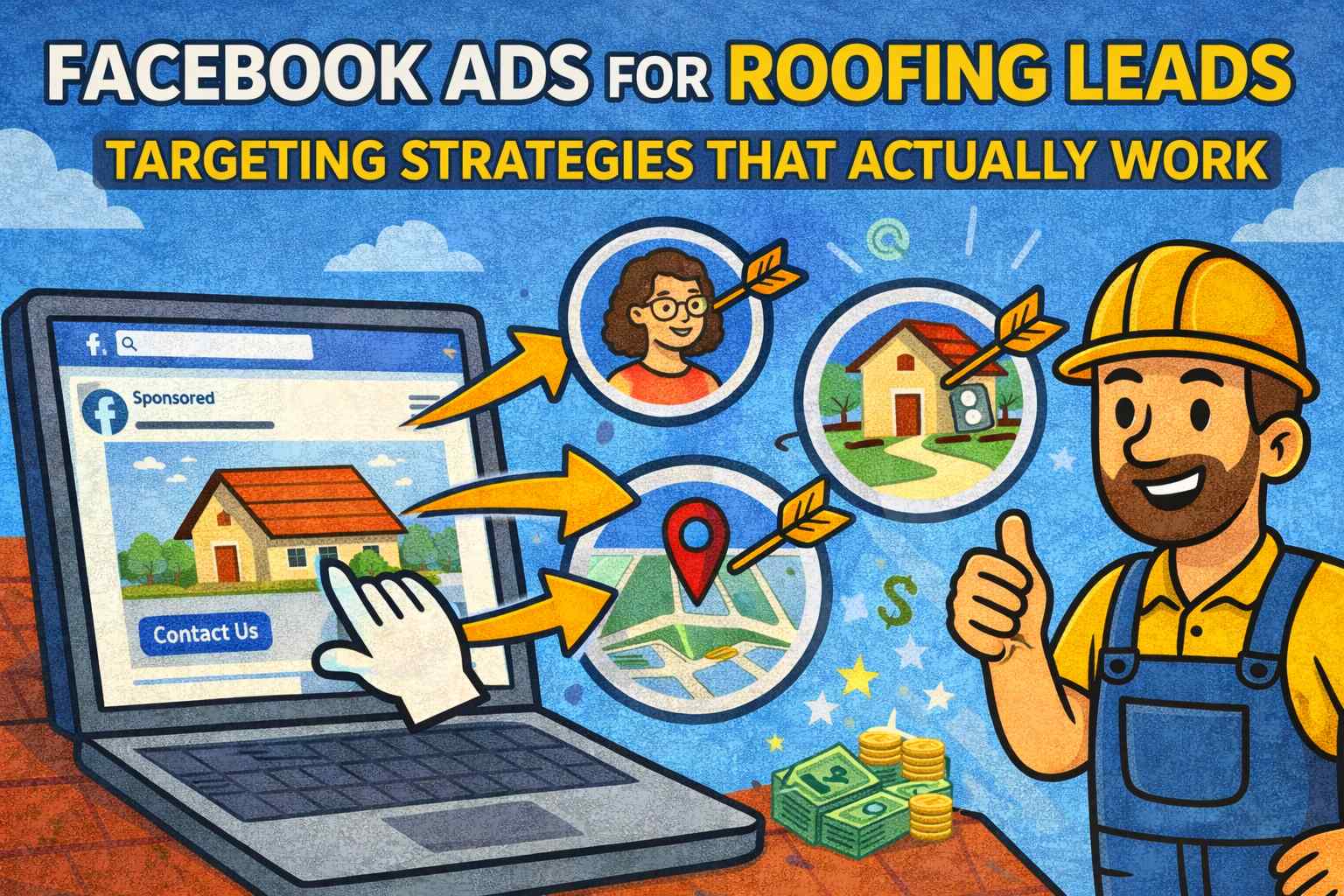
  • Facebook Ads for Roofing Leads: Targeting Strategies That Actually Work

    Facebook Ads for Roofing Leads: Targeting Strategies That Actually Work

    If you’ve ever boosted a Facebook post, burned a few hundred dollars, and ended up with nothing but likes from people who don’t even own a house… you’re not alone.

    Facebook and Instagram can be incredible roofing lead sources—but only if you target the right people, with the right offer, in the right locations. In this guide, we’ll walk through practical targeting strategies roofers can use to turn social traffic into real roofing leads.

    If you want help turning these strategies into a full lead system, you can see how we work with contractors at:
    https://roofingleads.help/services/


    Why Facebook Ads Work for Roofing (When Done Properly)

    Google Ads catches people actively searching “roof repair near me.” Facebook is different. Most people are scrolling, not hunting for a roofer.

    So why use Facebook at all?

    • You can put offers in front of homeowners before they start Googling
    • You can stay visible during storm season and renewal cycles
    • You can retarget people who visited your site or clicked your Google Ads
    • You can fill pipeline with inspection requests, maintenance programs, and quotes

    Think of Facebook ads as a demand generator and follow-up amplifier, not a replacement for Google or your website. It works best as part of an overall lead engine like the ones we talk about across the guides on:
    https://roofingleads.help/blog/


    Step 1 – Start With a Clear Offer (Not Just “Free Estimates”)

    Targeting is pointless if your offer is boring.

    Strong roofing offers for Facebook:

    • Free storm damage inspection after hail or wind in a specific area
    • Limited-time “roof tune-up” or maintenance package
    • Second-opinion review on an insurance scope
    • Seasonal checkup (pre-winter, post-winter, pre-rainy season)
    • Commercial roof assessment for building owners and property managers

    Your targeting will change depending on whether you’re focused on residential, commercial, or a specific region that lines up with where you actually work. (If you cover multiple cities or regions, make sure your campaigns match how your markets are laid out in your Locations section:
    https://roofingleads.help/locations/)


    Step 2 – Dial In Your Geo-Targeting

    Location is the first filter that matters for roofing leads.

    Use tight geographic zones

    Instead of targeting an entire state or province, focus on:

    • Cities and towns where you already do profitable work
    • Neighborhoods with the right age/price of homes
    • Areas that just got hit by a storm (for storm campaigns)

    On Facebook, that usually means:

    • “People living in this location” (not just recently in the area)
    • Radius targeting around specific zip codes or city centers
    • Separate campaigns for different cities or regions if they perform differently

    You can later mirror these areas with content and landing pages on your site, organized under:
    https://roofingleads.help/locations/


    Step 3 – Target Likely Homeowners (Not Just Anyone in the Area)

    You don’t want to pay for clicks from renters who can’t make roofing decisions.

    While Facebook has reduced some of its detailed targeting for housing-related ads, you can still:

    • Focus on age ranges more likely to own homes (for many markets, 28–65+)
    • Use income or “household income” segments where available and compliant
    • Layer on interests that lean toward homeowners, like home improvement and DIY

    For commercial roofing, shift your targeting toward:

    • Job titles like “property manager”, “facility manager”, “building owner”
    • Interests around commercial real estate and property management
    • Lookalike audiences based on your current commercial clients (more on this below)

    The goal is to get as close as possible to decision-makers—residential or commercial—within the rules of the platform.


    Step 4 – Build Smart Custom and Lookalike Audiences

    This is where Facebook gets powerful for roofing companies that already have some traffic and jobs under their belt.

    Custom audiences you should be using

    • Website visitors
      People who visited your site in the last 30–180 days (especially your service and estimate pages).
    • Lead form submitters
      People who filled out a Facebook lead form but didn’t become customers.
    • Customer lists
      Upload a list of past customers (emails/phone numbers) to stay in front of them for referrals, maintenance, and upgrades.

    These custom audiences can be retargeted directly or used to create lookalikes.

    Lookalike audiences based on your best customers

    Create lookalike audiences from:

    • Your best past customers (high-ticket jobs, low headaches)
    • People who filled out your quote or inspection forms
    • Visitors to key pages like “Roof Replacement” or “Commercial Roofing”

    Facebook will find people who “look like” those audiences in your target areas. This is often more effective than guessing interests from scratch.

    If you’re driving traffic back to landing pages and service pages built similarly to what we outline on:
    https://roofingleads.help/services/
    these lookalikes can become a reliable stream of high-intent prospects.


    Step 5 – Use Retargeting to Capture “Almost Leads”

    Most people don’t become a lead the first time they see you. That’s where retargeting comes in.

    Who to retarget

    • People who visited your website but didn’t request an estimate
    • People who watched a large portion of your video ads
    • People who opened but didn’t submit Facebook lead forms

    What to show them

    • Stronger offers (“Storm damage in your area? Get a free inspection.”)
    • Social proof (reviews, testimonials, project photos)
    • “Before and after” transformations
    • Urgency reminders (limited-time promo, season ending, insurance deadlines)

    Retargeting is cheaper than cold prospecting and hits people who already showed some interest. When paired with educational content and consistent branding, it supports everything else in your roofing lead generation funnel (SEO, Google Ads, referrals, etc.).


    Step 6 – Match Your Creative to Your Targeting

    Even the best targeting fails if your ads look like wallpaper.

    For residential roofing campaigns

    Use visuals and messaging that speak directly to homeowners:

    • Before/after roof photos
    • Close-ups of hail damage, missing shingles, or leaks (without being gruesome)
    • Families, curb appeal, and peace-of-mind angles

    Copy angles that work:

    • “Recent hail in [City]? Get your roof inspected before your insurance deadline.”
    • “Roof older than 15 years? Find out if a replacement makes more sense than another repair.”
    • “Small leak now can become a big problem later—book your inspection today.”

    For commercial roofing campaigns

    Shift the focus to:

    • Flat roofs, big buildings, and mechanical units
    • Protection of equipment and interior assets
    • Lifecycle cost, maintenance plans, and tenant comfort

    Copy angles:

    • “Flat roof leaking? Protect your tenants and equipment with a free commercial roof assessment.”
    • “Stop emergency repairs. Start a proactive roof maintenance plan for your building.”

    Use case studies and photos that tie into real jobs and locations you serve. As you build these assets, turn them into content on your site and repurpose them as blogs or case studies, which you can later showcase under:
    https://roofingleads.help/blog/


    Step 7 – Connect Facebook Ads to a Proper Funnel

    Clicks don’t pay the bills. Booked inspections and signed contracts do.

    Where you send traffic matters

    For most roofing campaigns, traffic should go to:

    • A specific landing page for the offer
    • A service page tailored to the problem (leaks, replacement, storm, commercial)
    • A short, mobile-friendly form plus click-to-call options

    Avoid sending ad traffic to a generic homepage that doesn’t match the ad message. Each major Facebook campaign (storm, maintenance, commercial, replacement) should connect to its own page—similar in structure to how your core services are laid out at:
    https://roofingleads.help/services/

    Have follow-up ready before you launch

    Your office or sales team should be ready to:

    • Call new leads quickly (within minutes, when possible)
    • Text/email people who don’t answer
    • Track leads and statuses in a CRM or simple pipeline
    • Mark which leads came from Facebook, Google, referrals, etc.

    A solid follow-up process can double the number of jobs you close from the same ad spend.


    Step 8 – Watch the Right Numbers (Not Just Likes)

    To know if your Facebook ads are working, focus on:

    • Cost per lead (form fill or qualified call)
    • Cost per booked appointment
    • Cost per signed job
    • Revenue and profit from Facebook-sourced customers

    If you’re running Google Ads and SEO alongside Facebook, compare performance across channels. Sometimes Facebook shines for storm damage and maintenance offers, while Google dominates for emergency leak calls and core replacements.

    You can build reports that line up with your service locations and offerings—similar to how your markets are broken out at:
    https://roofingleads.help/locations/


    When to Get Help With Facebook Ads for Roofing Leads

    You can absolutely test and refine Facebook campaigns yourself. But it might be time to bring in roofing-specific help when:

    • You’ve tried boosting posts and DIY campaigns with mixed results
    • You don’t have time to manage targeting, creative, and optimization every week
    • You want Facebook to plug into a bigger lead engine (SEO, Google Ads, email follow-up, etc.)
    • You’re expanding into new cities or commercial work and need predictable pipelines

    A good partner will:

    • Understand roofing buyers and seasonality
    • Build offers, landing pages, and follow-up processes that match your services
    • Integrate Facebook traffic with Google Ads, Local SEO, and your website
    • Report on leads, appointments, and jobs—not just impressions and clicks

    If you want a strategy that ties Facebook ads into your overall roofing lead generation system, you can request a strategy call here:
    https://roofingleads.help/contact-2/
    On that call, we’ll look at your markets, services, and current lead sources, then outline how Facebook ads, Google, and your website can work together to bring you more consistent, high-quality roofing leads.


    Next Steps: Turn Facebook Into a Real Roofing Lead Source

    To recap, making Facebook ads work for roofing looks like this:

    • Start with a strong, specific offer
    • Target tight geographic areas that match where you actually work
    • Focus on likely homeowners or commercial decision-makers
    • Use custom and lookalike audiences, not just broad interests
    • Retarget visitors, video viewers, and form-openers who didn’t convert
    • Match your creative to your audience and service type
    • Send traffic to dedicated landing pages with clear CTAs
    • Track leads, appointments, and jobs—not just clicks and likes

    For deeper guides on roofing lead generation systems, Google Ads, SEO, and more, check out:
    https://roofingleads.help/blog/

    And if you’d rather plug into a proven roofing lead system instead of guessing on targeting and creatives, book a call here and we’ll map it out with you:
    https://roofingleads.help/contact-2/